

Ceiling Speaker Installation
Ceiling speaker installation for Palm Beach, Jupiter, Palm Beach Gardens, and West Palm Beach focused on cleaner audio design, better room coverage, discreet speaker placement, wiring strategy, and systems that are easier to enjoy every day.

Ceiling speaker installation should solve more than where the speakers go
A strong ceiling speaker installation starts with a simple question: what should the room actually do well when the system is finished? Some homeowners want even background music across a kitchen, living room, or covered outdoor transition. Some want a cleaner media room without floor-standing speakers taking over the layout. Others are trying to build a more immersive theater with overhead channels, or they want multiple rooms tied together so music is easy to start, stop, and control without walking from space to space. Those are very different goals, and they should not all be treated with the same speaker count, the same placement pattern, or the same equipment recommendations.
That is where better planning matters. Ceiling speakers can look minimal and perform beautifully, but only when the installation is built around room use, seating position, ceiling construction, amplifier load, wiring routes, and the kind of listening the homeowner expects every day. A layout designed for casual music fill is different from one designed for focused listening. A room that needs TV sound reinforcement is different from a room that is supposed to disappear into the background until guests arrive. Even the same speaker can perform very differently depending on spacing, aiming, power, and how the room surfaces reflect sound.
Ceiling speaker installation has to be planned around real room decisions, not just speaker selection. Homeowners need to know whether wires can be hidden cleanly, whether the ceiling has enough depth, whether a retrofit will require visible repair, whether one pair of speakers is enough, whether the system should support TV audio, and whether an open-concept space will sound balanced from everyday listening areas.
PBCAV approaches those choices room by room before any ceiling cuts are made. That includes speaker positioning, wire-path evaluation, equipment matching, control planning, and an honest recommendation about whether ceiling speakers are the best fit. In some rooms, they are ideal for distributed music and clean aesthetics. In others, they work best as part of a larger system with a subwoofer, soundbar, media rack, or additional architectural speakers.
When the plan is right, ceiling speaker installation becomes less about hiding speakers and more about improving how the home sounds day to day. Music coverage feels more even, rooms stay visually calmer, controls become easier to use, and the finished system feels deliberate instead of pieced together.
The goal is to create a system that looks clean, sounds right, and feels easy to live with. Music coverage should feel even, rooms should stay visually calmer, controls should be easier to use, and the equipment choices should make sense for how the space is actually used.
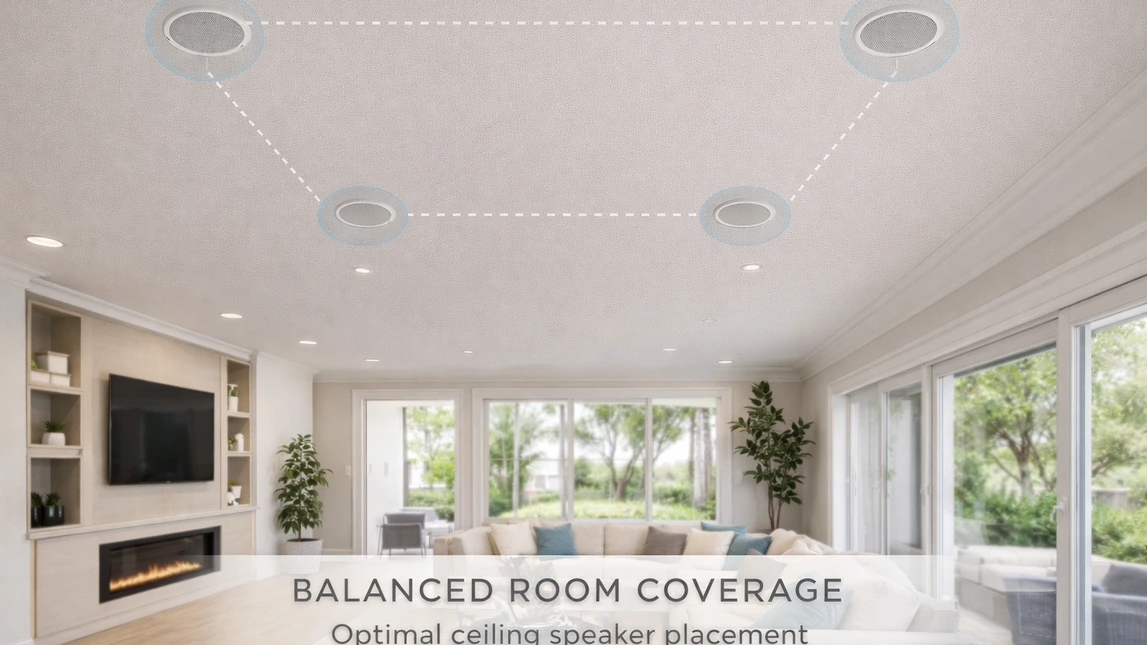
Placement matters more than most homeowners expect
A better ceiling speaker installation starts with layout, not just speaker brand. Room dimensions, seating areas, ceiling height, listening distance, nearby walls, and open transitions all affect how the audio spreads through the space. A pair of speakers dropped too close together can leave the room sounding narrow. A pair spread too far apart can create gaps and weak center coverage. In rooms built around a television or projector, placement decisions become even more important because music listening, dialogue, and surround effects all ask different things from the speaker layout. Getting those decisions right early helps the finished system sound more balanced and intentional.
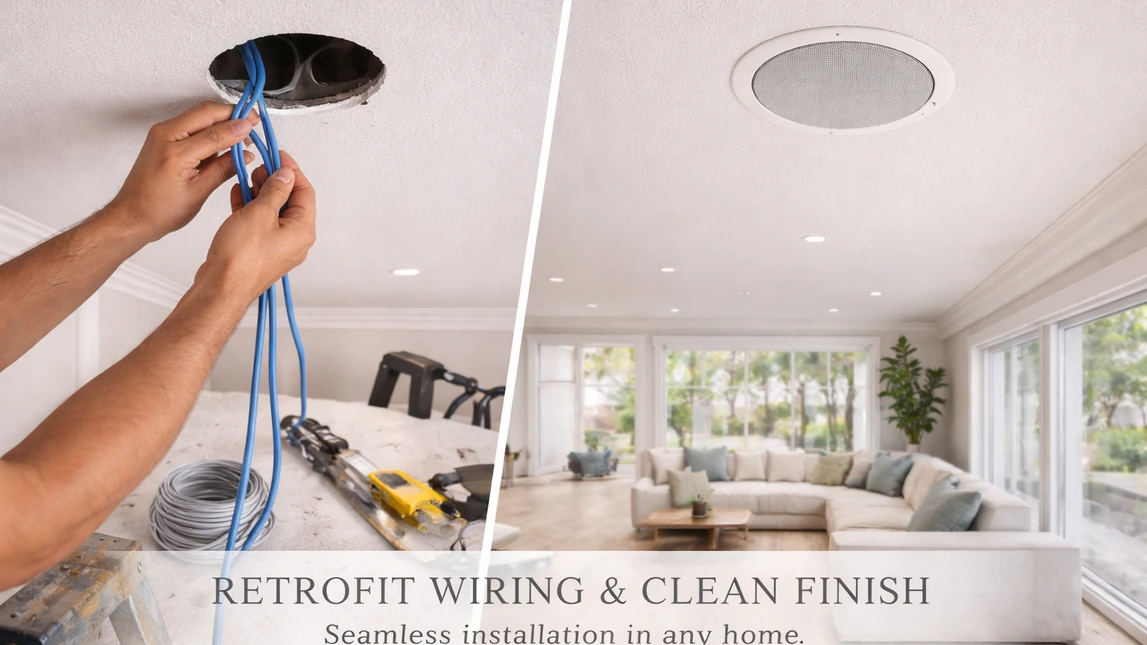
Retrofit work is about access, wire paths, and a clean finish
Many ceiling speaker projects happen in finished homes, which means installation quality depends heavily on how the system is routed and finished. Joists, fire blocks, HVAC runs, insulation, recessed lighting, and limited attic access can all shape what is practical in a specific room. Good retrofit planning reduces surprises, limits unnecessary drywall disruption, and helps determine where amplifier equipment should live so the system remains serviceable. Homeowners usually care about the same outcome: clean lines, minimal visible disruption, and confidence that the finished work will not feel patched together. That is why ceiling speaker installation should be approached as a full wiring and finish strategy, not just a speaker swap.
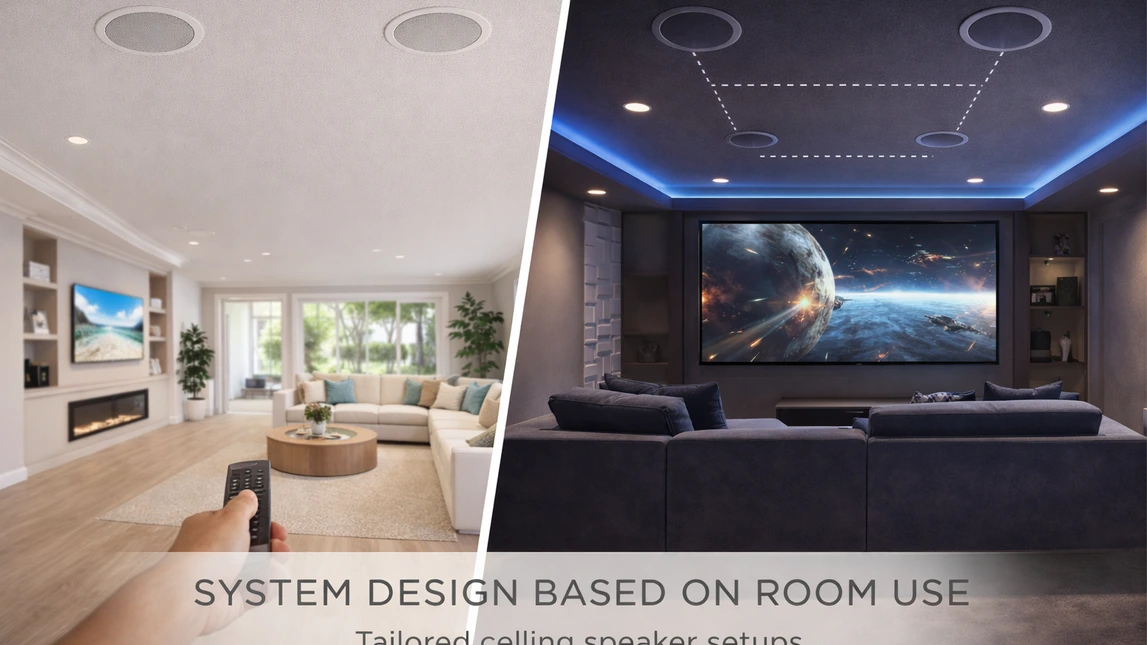
The right system depends on how the room will be used
Ceiling speakers are not one-size-fits-all. A room used for casual streaming music may need wide, even coverage with simple app control. A media room may need stronger front-stage support, better dialogue strategy, and equipment matched to the television setup. A theater build may call for ceiling speakers only in overhead roles, with other speaker positions handling the main soundstage. In open-plan spaces, the conversation often shifts to how many speakers are needed, how zones should be separated, whether a subwoofer should be added, and how volume control should work when the household wants music in one area but quiet in another. Better recommendations start by defining the listening goal before selecting components.

A cleaner result still needs to sound right every day
One of the strongest reasons homeowners look at ceiling speaker installation is visual simplicity. They want better audio without cluttering the room with cabinets, stands, or visible wiring. That aesthetic benefit matters, but the system still has to perform. Speaker aim, tonal balance, amplifier matching, source selection, and final tuning all shape whether the room sounds smooth and enjoyable or thin and forgettable. A strong installation protects both priorities at the same time: the speakers feel discreet in the architecture, and the system remains satisfying enough that people actually use it. That combination is what makes ceiling speakers feel like a finished home upgrade instead of an unfinished compromise.
When ceiling speakers are the right solution
Ceiling speakers make the most sense when a room needs good audio coverage without visible speaker cabinets, stands, or clutter. For most homeowners, the real decision comes down to room use, listening habits, placement, wiring access, and whether the speakers are being used for music, TV support, or part of a larger surround sound plan.
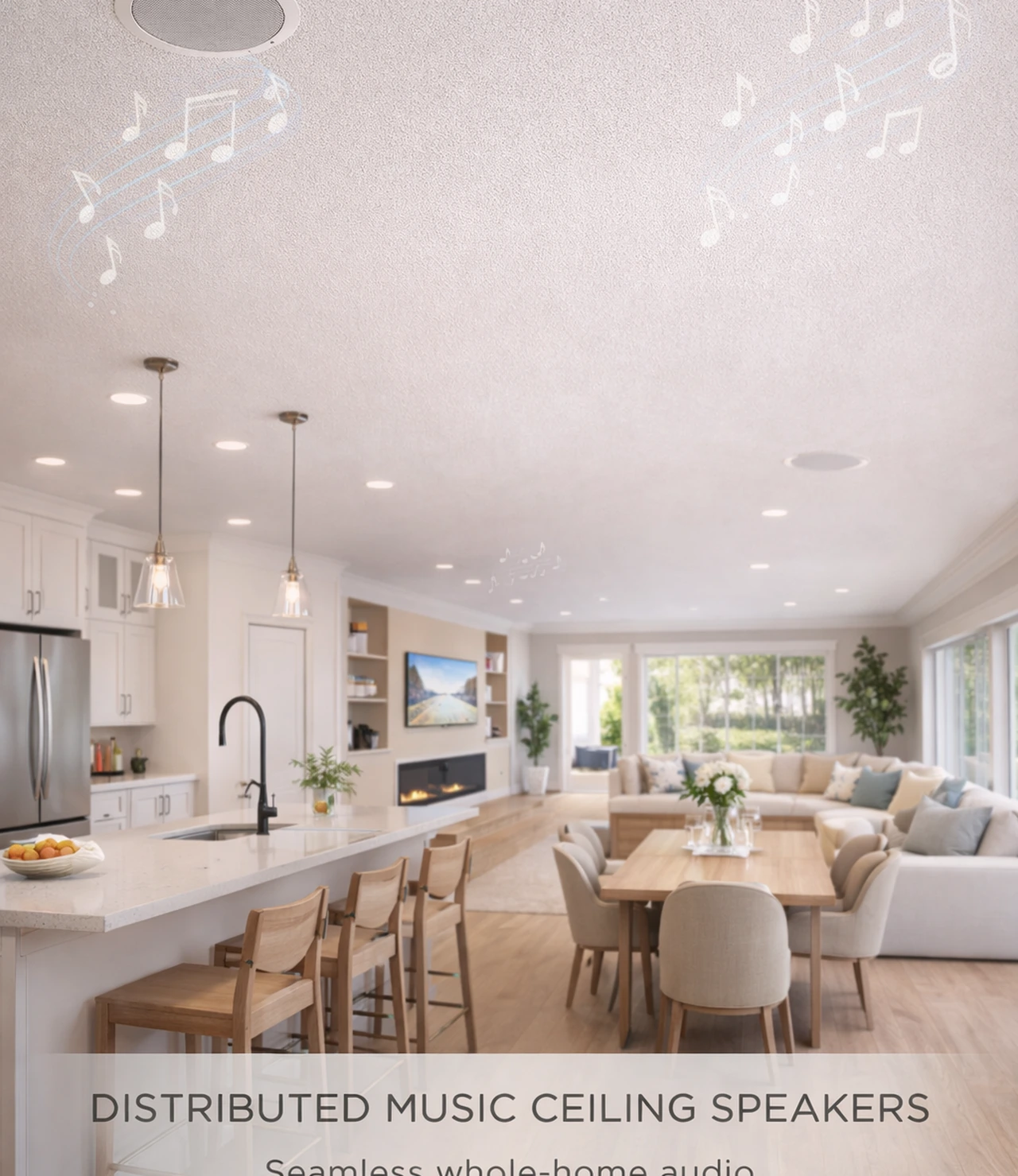
Distributed music for kitchens, living areas, and open-concept spaces
Ceiling speakers are often at their best when the goal is clean, even music coverage across rooms that are used constantly throughout the day. In these spaces, homeowners usually care less about a dramatic front soundstage and more about broad, comfortable sound that feels present without dominating the room. The strongest installations focus on speaker spacing, zone planning, and easy control so the audio feels natural from one part of the room to another.
- Plan speaker count around the actual size and shape of the room rather than assuming one pair fits every layout.
- Separate zones when different parts of the home need independent volume or source control.
- Match amplifier power and speaker load correctly so the system remains stable and reliable.
- Consider subwoofer support when the homeowner expects fuller music performance.
- Choose controls that make quick daily use easier instead of adding friction to simple listening.
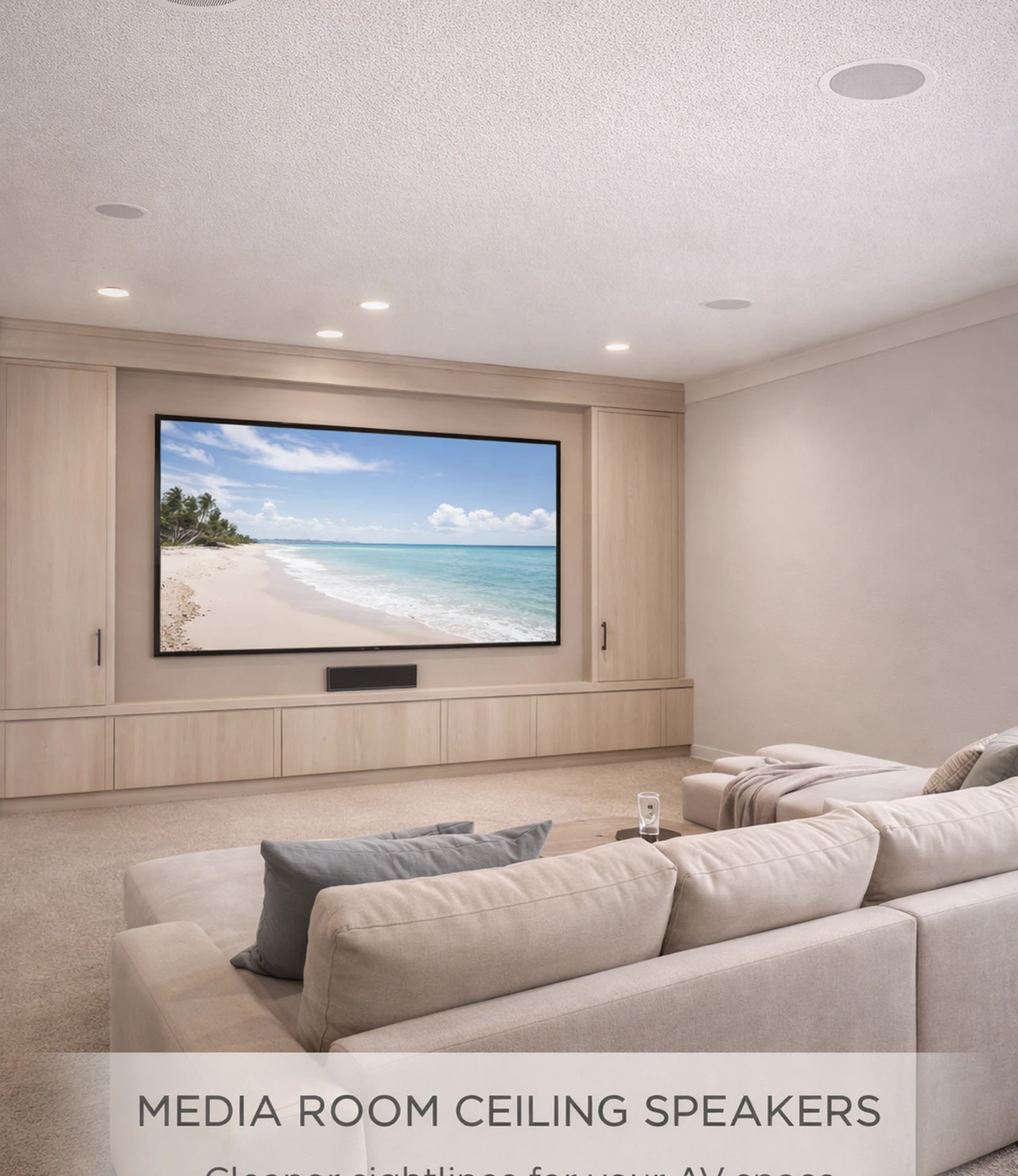
Media rooms that need cleaner sightlines without giving up better sound
Some homeowners look at ceiling speakers because they want to reduce visible equipment in a media room. That can work well, but the right system depends on whether the room is centered on music, television, or a more immersive entertainment setup. A smart plan accounts for dialogue clarity, listening position, and whether ceiling speakers should support the room on their own or work alongside other speaker formats.
- Decide early whether the room is primarily for background entertainment or more focused viewing.
- Avoid forcing all sound into the ceiling when a mixed speaker layout would create a better experience.
- Think through television location, furniture placement, and viewing angles before finalizing speaker cuts.
- Use tuning and calibration to improve balance after installation instead of relying on placement alone.
- Keep control simple so the system feels approachable for everyone in the home.
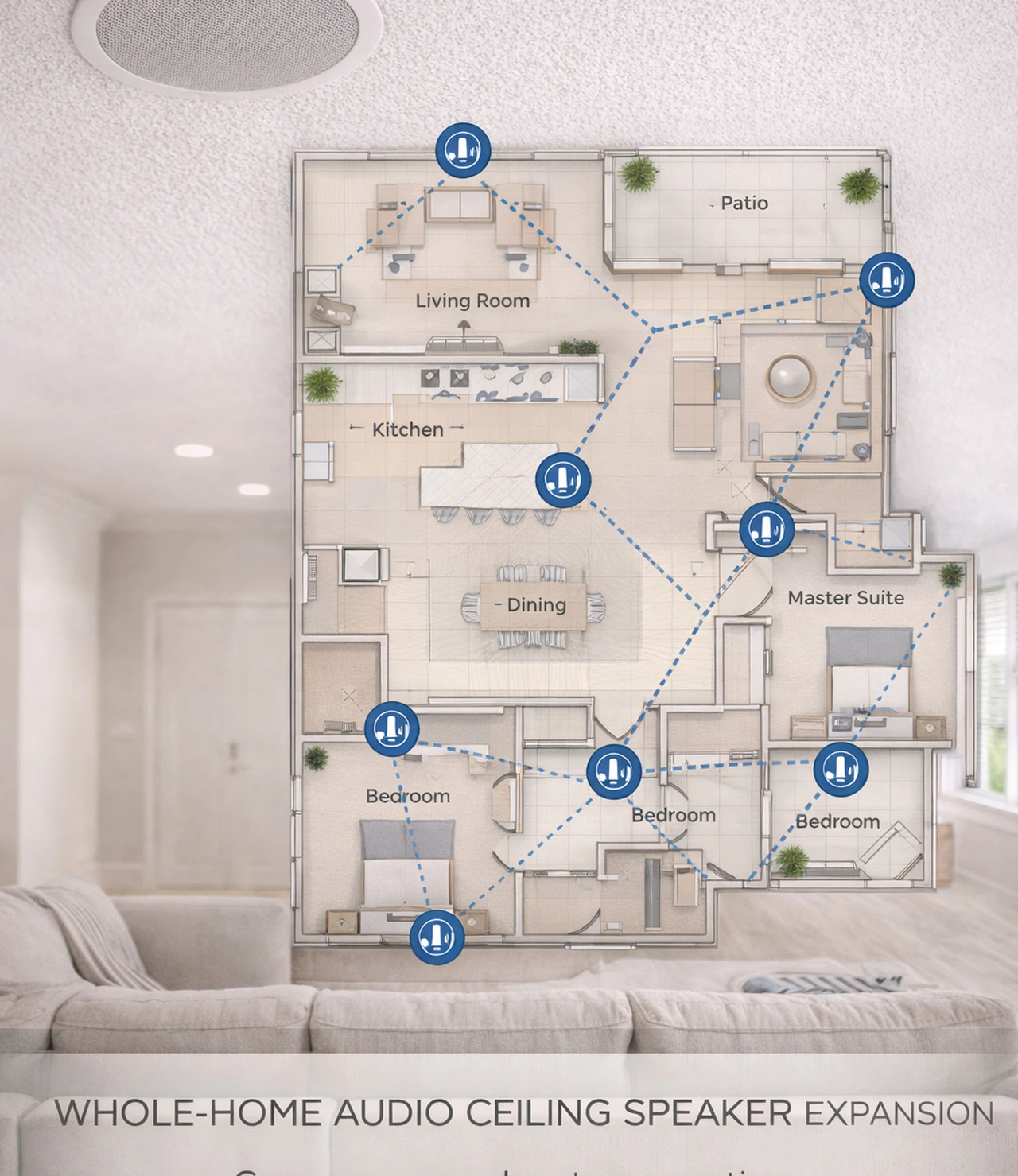
Whole-home audio plans that need flexible expansion later
Ceiling speaker installation is often part of a larger audio strategy, not a one-room project. Homeowners may want to begin with a main gathering space and add bedrooms, offices, covered outdoor areas, or a primary suite later. Planning for that growth upfront creates a better long-term result because wiring, equipment location, and zone structure can be organized before the house becomes harder to scale.
- Leave room in the design for future zones instead of building a system that is maxed out on day one.
- Centralize equipment where service, ventilation, and wire management remain practical.
- Choose platforms that make adding rooms and grouping audio easier over time.
- Think through app control, keypad needs, and user permissions before the system gets larger.
- Keep the design clean enough that future additions feel intentional, not improvised.
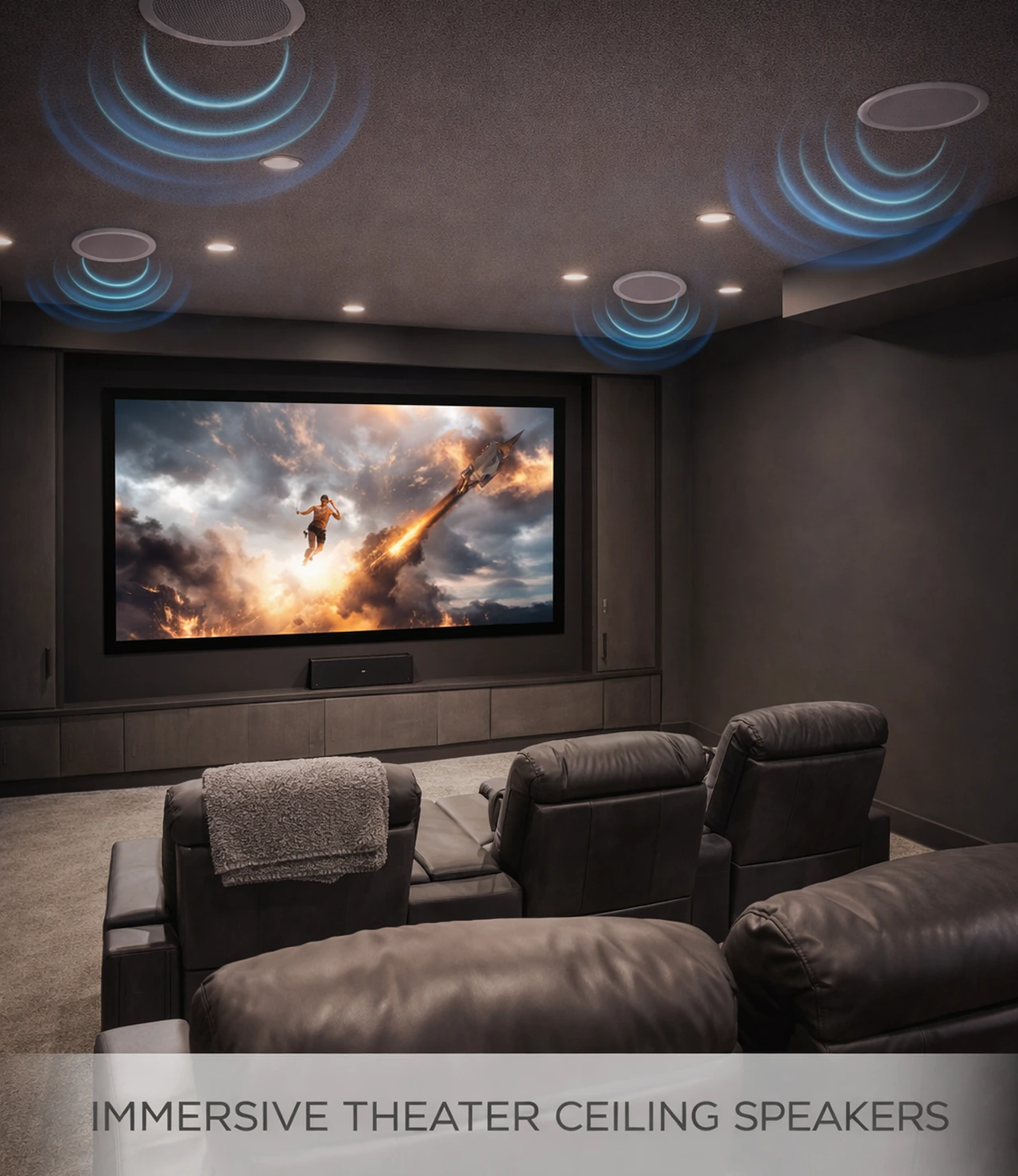
Immersive audio layouts where ceiling speakers have a specific job
In theater-oriented spaces, ceiling speakers are often most effective when they are used intentionally for overhead effects rather than asked to do everything. That distinction matters because immersive formats reward better placement and more disciplined system design. Homeowners searching this service may not always know the technical language, but they do understand the difference between a room that sounds enveloping and one that simply sounds louder from above.
- Define whether the room is aiming for distributed music, surround support, or true overhead effects.
- Use seating position as the anchor point for placement decisions whenever the room is viewing-focused.
- Consider the relationship between ceiling speakers and the rest of the speaker system before cutting.
- Reserve enough planning time for calibration, level matching, and final tuning.
- Be willing to recommend a different speaker format when it would create a more convincing theater result.
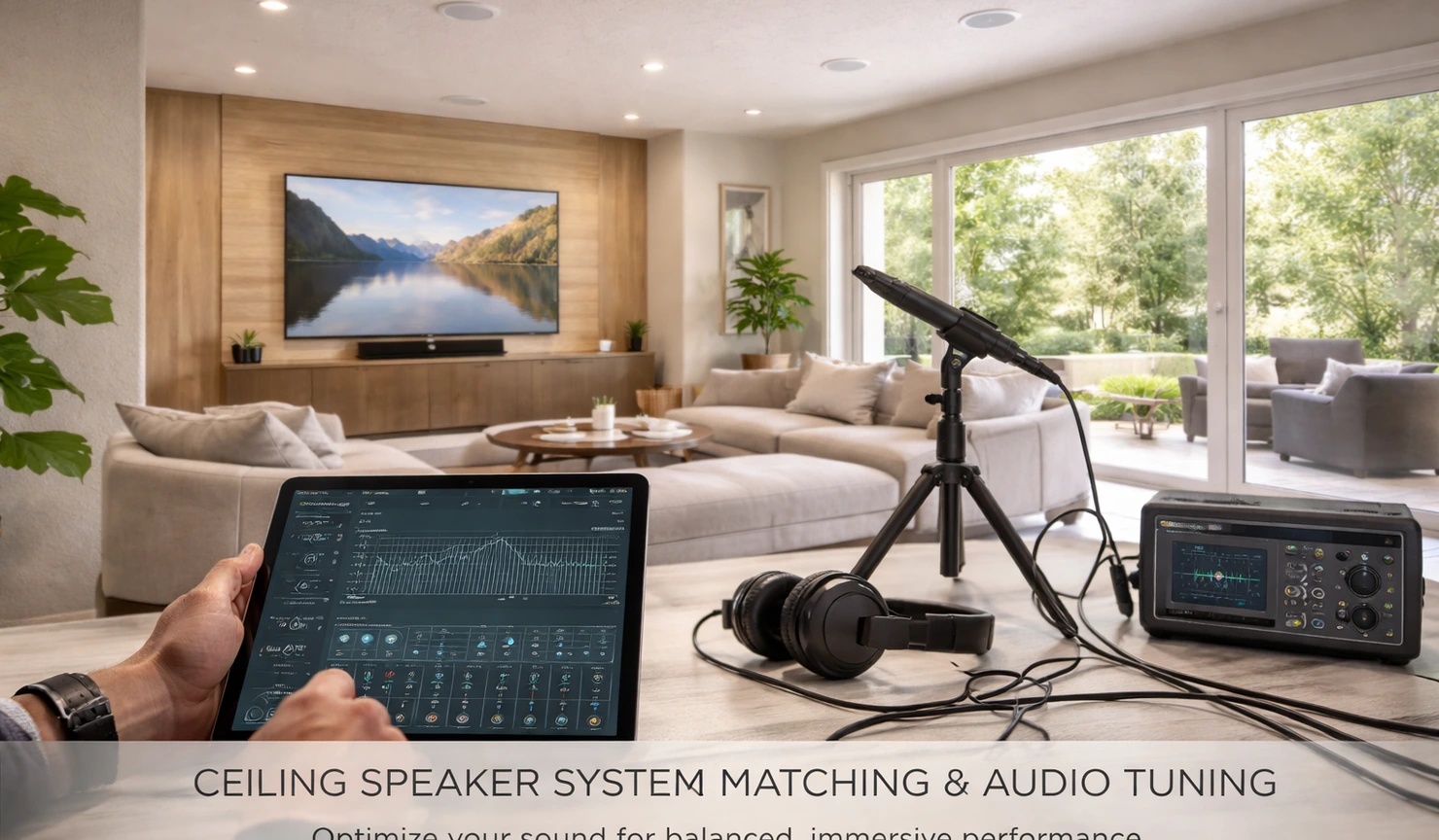
Good ceiling speaker installation still depends on system matching and tuning
The visible part of the job is only part of the result. Speaker sensitivity, impedance, amplifier selection, source integration, and final tuning all shape how the system performs once the installation is complete. A room can look clean on day one and still disappoint later if the audio feels thin, uneven, or harder to use than expected. The stronger approach is to pair the right speakers with the right electronics, then finish with calibration that helps the room sound smoother and more consistent in daily use.
What a complete ceiling speaker installation process includes

Ceiling Speaker Installation Process And Room Planning
Homeowners looking for ceiling speaker installation are usually not shopping for a hole in the ceiling. They are trying to solve room audio, reduce clutter, improve coverage, and end up with a system that feels easy to use. A complete process starts with room assessment, speaker layout, wiring evaluation, equipment matching, careful installation, and final tuning so the finished system supports the room’s real purpose.
Common planning considerations
- Ceiling depth and available mounting space
- Joists, obstructions, and practical wire routes
- Room size, shape, and ceiling height
- Listening position and furniture layout
- Speaker quantity and zone separation
- Amplifier location and service access
- Control method and source integration
What homeowners usually care about most
- Clean speaker placement that does not feel random
- Minimal visible disruption during retrofit work
- Balanced sound instead of hot spots and dead areas
- Simple control for music, TV, or grouped rooms
- Equipment choices that fit the room’s real use
- Room to expand the system later if needed
- A finished result that looks discreet and sounds worthwhile
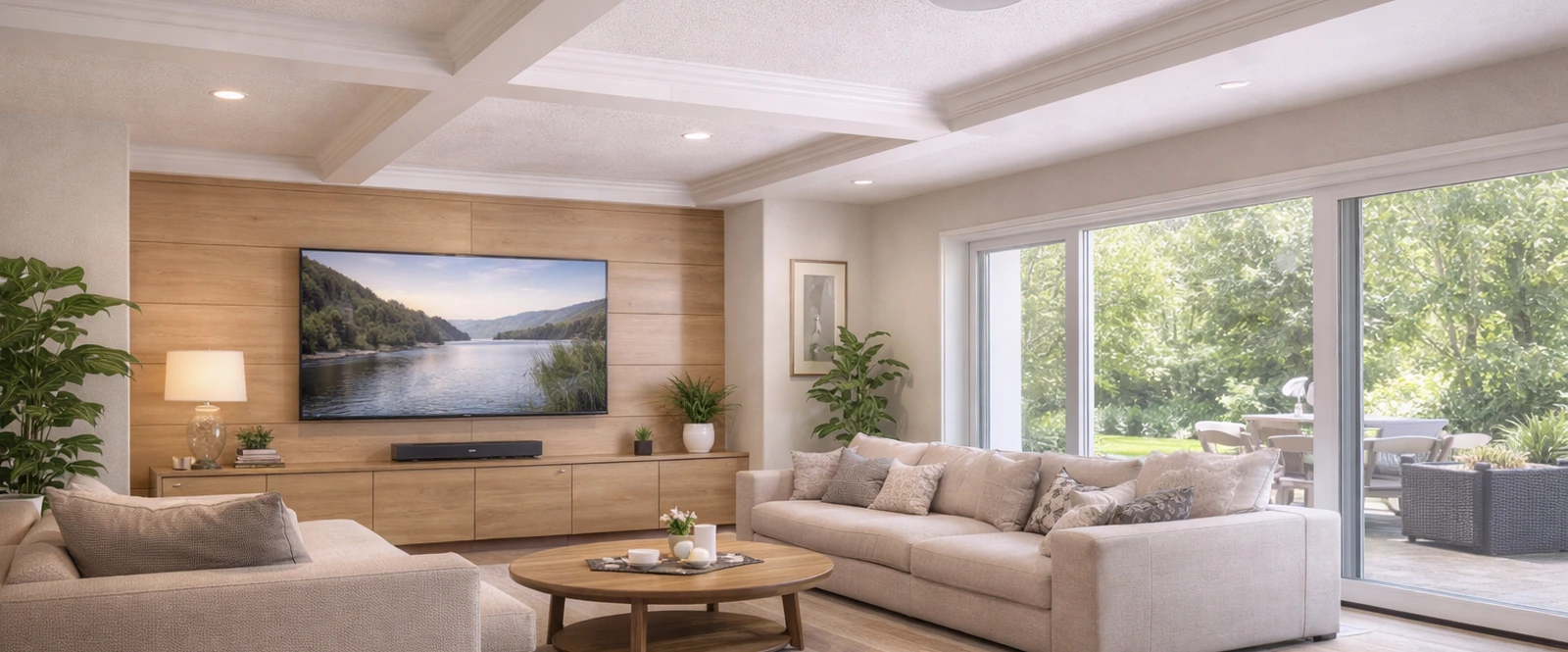

Ceiling speakers work best when the design matches the room
Some rooms need wide music coverage. Some need cleaner media-room audio. Some need true overhead channels as part of a larger theater plan. A better recommendation starts with use case, placement, and system design rather than assuming one ceiling speaker layout fits every room.
Choosing ceiling speakers is only part of the decision
The better question is how the full room should sound, how clean the installation should look, and how simple the system should feel after the work is done.

Ceiling Speaker Installation
Start with a room plan before choosing the final speaker layout
A better ceiling speaker result starts with the room itself: how it is used, where people listen, what equipment should be tied in, and what kind of finish will feel clean once the installation is complete. Palm Beach Custom AV can help turn those decisions into a more organized plan.