

Marine Audio & Electronics Installation
Marine audio and electronics installation for boat & yacht owners in Palm Beach, Jupiter, Palm Beach Gardens, and West Palm Beach who want better sound, cleaner integration, and dependable on-water performance.

Marine Systems That Sound Better, Work Better, And Hold Up Better
Marine audio and electronics installation is different from almost every other type of AV work because the environment is harder on every component and every connection. A boat can look simple from the outside, but behind the panels there are real limitations around moisture, UV exposure, electrical load, available mounting depth, service access, and the way sound behaves in an open-air environment. That is why a marine upgrade should not begin with a random list of products. It should begin with how the boat is used, where people sit or stand, what needs to be controlled from the helm, how much output is actually needed underway, and what level of finish will make the system feel like it belongs on the vessel instead of looking added later.
For many owners, the real goal is not just louder music. It is having music that stays clean at cruising speed, helm electronics that are easier to see and trust, controls that make sense when family or guests are aboard, and an installation that does not create future headaches. That may mean replacing aging speakers and amplifiers, adding a better marine source unit, improving battery and power distribution, integrating chartplotters or fishfinder displays, cleaning up old wiring, or planning a larger refit that brings audio, navigation, communication, lighting, and charging into a more cohesive setup.
A strong marine installation balances performance with restraint. Speaker count alone does not create a better system, and a bigger screen does not always create a better helm. Good results come from placement, power, mounting, wiring discipline, corrosion-conscious hardware choices, and thoughtful interface planning. A boat owner should be able to walk aboard, turn the system on, understand what is happening, and enjoy the result without fighting through cluttered controls, harsh sound, dim displays, or wiring that was hidden only until the first service visit.
That is why this type of project works best when the installation is built around the vessel and the owner instead of around a one-size-fits-all package. Some boats need more output in the cockpit and transom area. Some need better speech clarity at the helm and simpler source selection. Some need navigation and sonar upgrades with better screen visibility and cleaner network planning. Others need a full cleanup of previous work so the next round of upgrades starts from a reliable foundation. The right path depends on how you boat, who uses the vessel, and what has been frustrating you about the current setup.
PBCAV approaches marine projects with that bigger picture in mind. The goal is to help create a boat that sounds better, works better, and feels more finished every time you leave the dock. That can include audio tuning, marine-grade wiring practices, helm display integration, accessory control, and practical planning for future expansion so your system is not boxed in the moment you decide to add another zone, another display, or another layer of control.
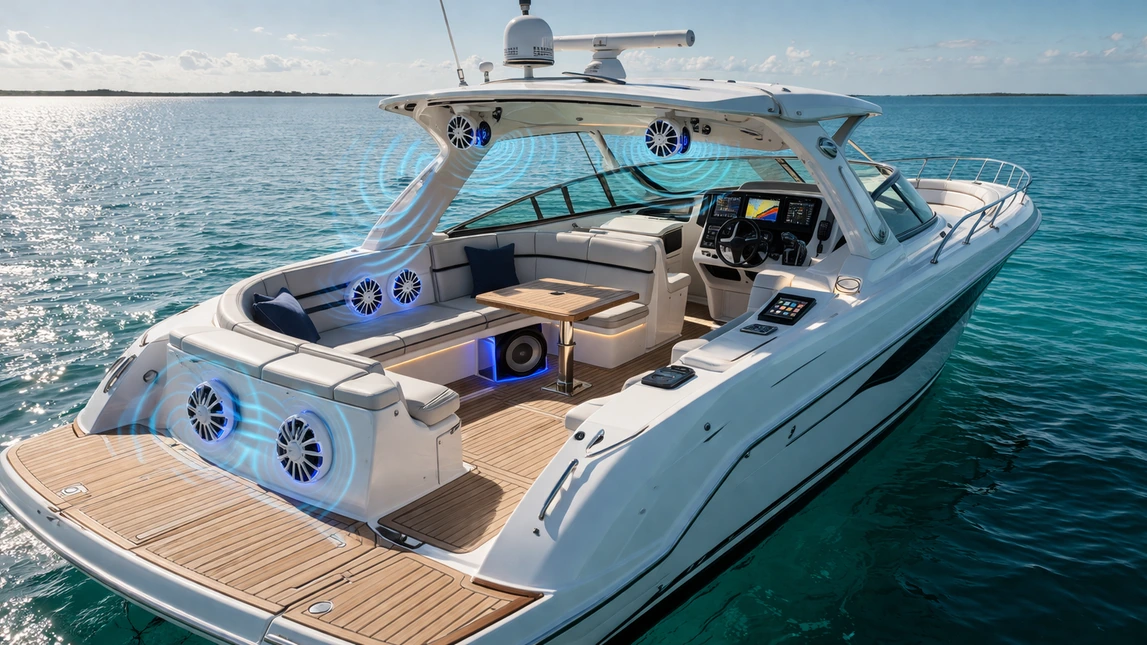
Marine Audio Systems Built For Open-Air Listening
Great marine sound is not created by copying a car audio layout onto a boat. Open air, wind, engine noise, hull layout, seating positions, and passenger movement all change what a system needs to do. We plan speaker locations, amplifier strategy, subwoofer integration, and control access around the way people actually use the vessel so the sound stays enjoyable instead of turning harsh, thin, or muddy once the boat is moving. The result is a marine audio system that feels intentional, with output where you want it and a cleaner overall listening experience.
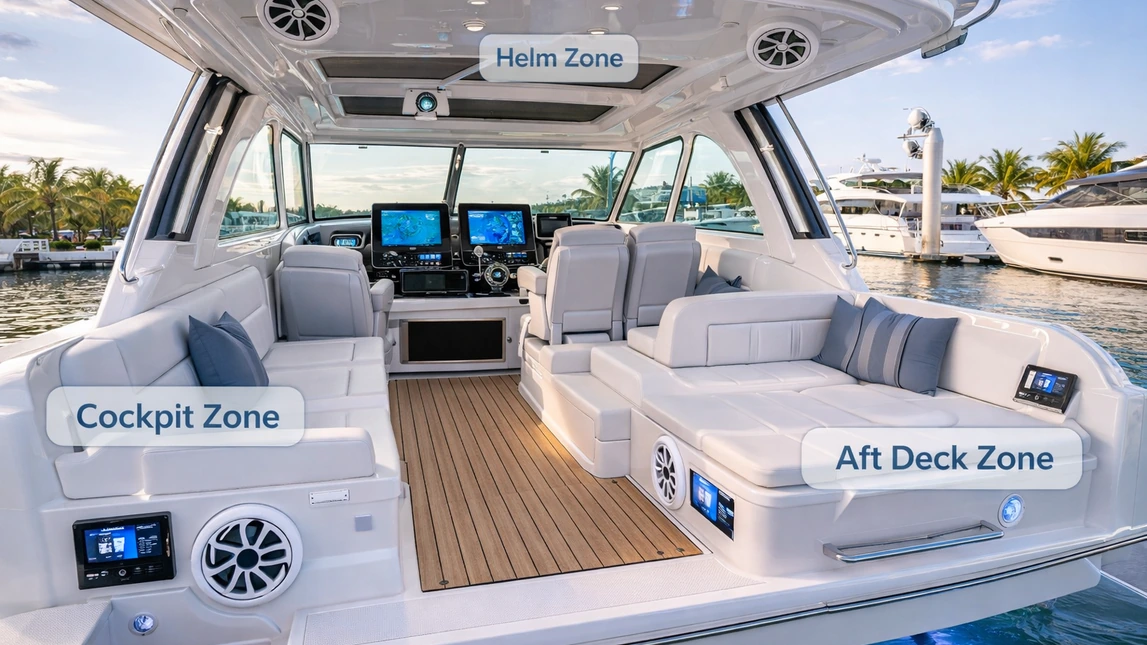
Marine-Grade Wiring, Power, And Installation Discipline
A marine system is only as strong as the details behind the panels. Wiring paths, terminations, mounting locations, fuse strategy, service loops, corrosion resistance, ventilation, and power distribution all matter because boats live in a punishing environment. We install with long-term reliability in mind so components are supported properly, service access remains practical, and the finished work is organized instead of chaotic. That matters whether the job is a focused stereo upgrade or a broader electronics refit that touches multiple systems.
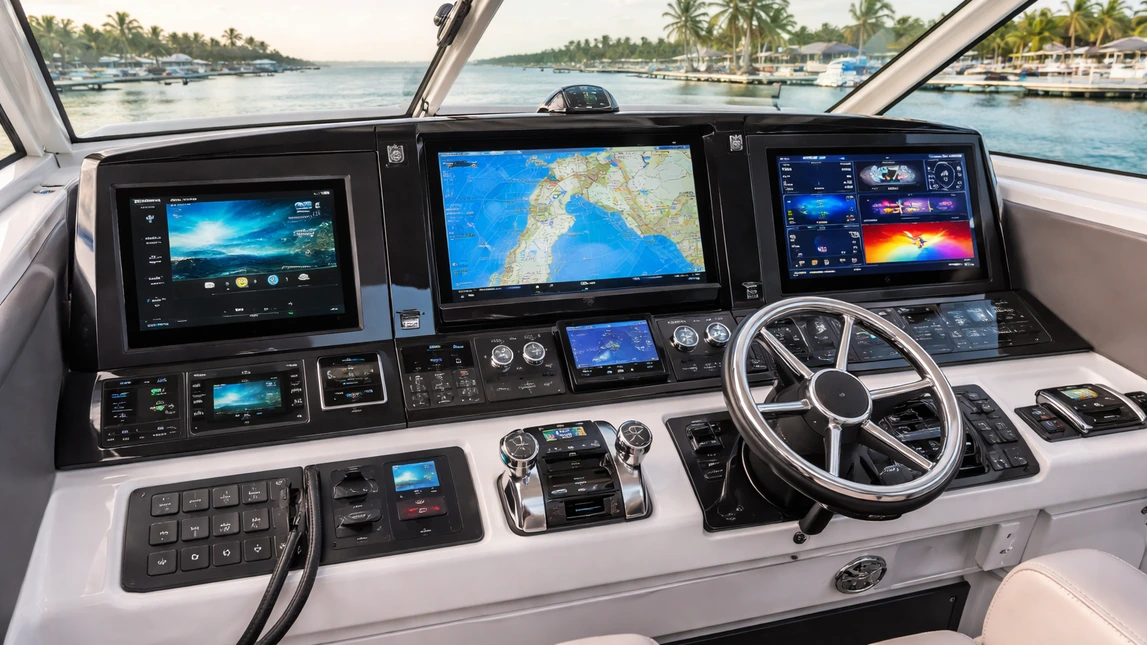
Helm Electronics That Are Easier To Use And Easier To Trust
Many owners reach out because the helm has become a mix of aging screens, awkward mounts, outdated sensors, and controls that no longer feel cohesive. A well-planned upgrade can improve visibility, layout, and day-to-day confidence through better display placement, cleaner mounting, updated navigation or sonar equipment, and more thoughtful integration of accessories and communication tools. The goal is not just adding technology. It is making the helm feel clearer, more organized, and more dependable every time the boat leaves the dock.
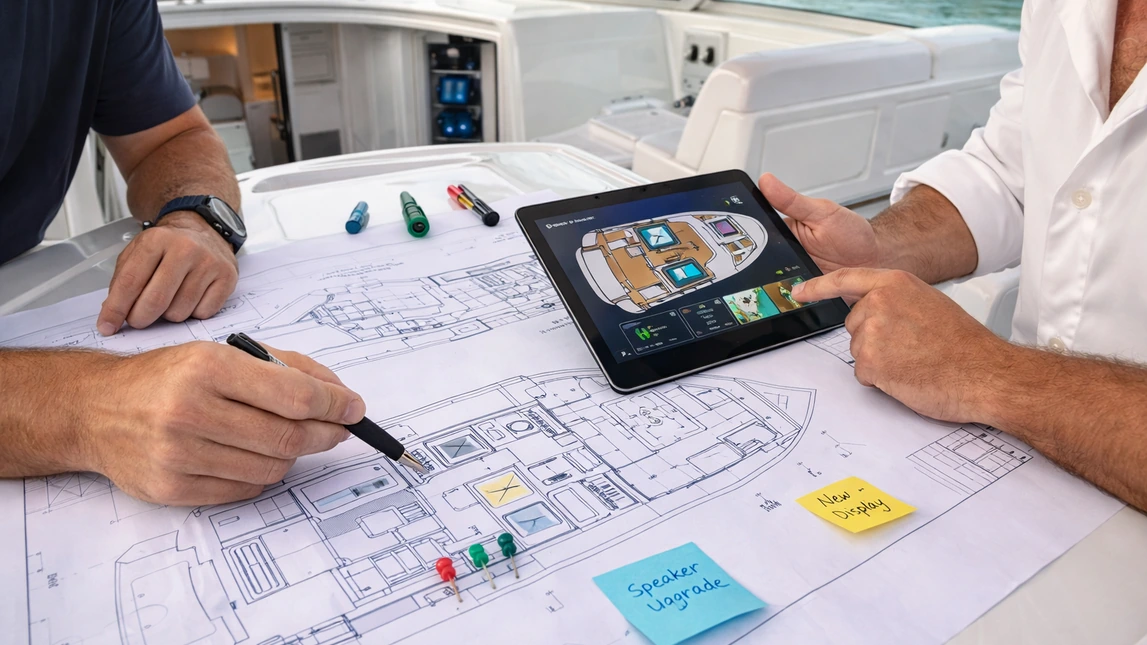
Refits Planned Around The Vessel, Not A Generic Package
Every boat has different space constraints, access points, storage priorities, and finish requirements. Some projects need subtle upgrades that preserve a clean factory look. Others call for more output, added zones, custom mounting solutions, or electronics expansion that prepares the vessel for how it will be used over the next several seasons. We plan around the actual platform so recommendations make sense for the boat, the owner, and the style of use instead of forcing a generic package into a layout that was never designed for it.
What A Well-Planned Marine Upgrade Can Include
Marine projects vary by vessel and priorities, but most successful installations combine strong audio performance, practical helm functionality, reliable wiring and power planning, and a finish that feels clean and intentional.
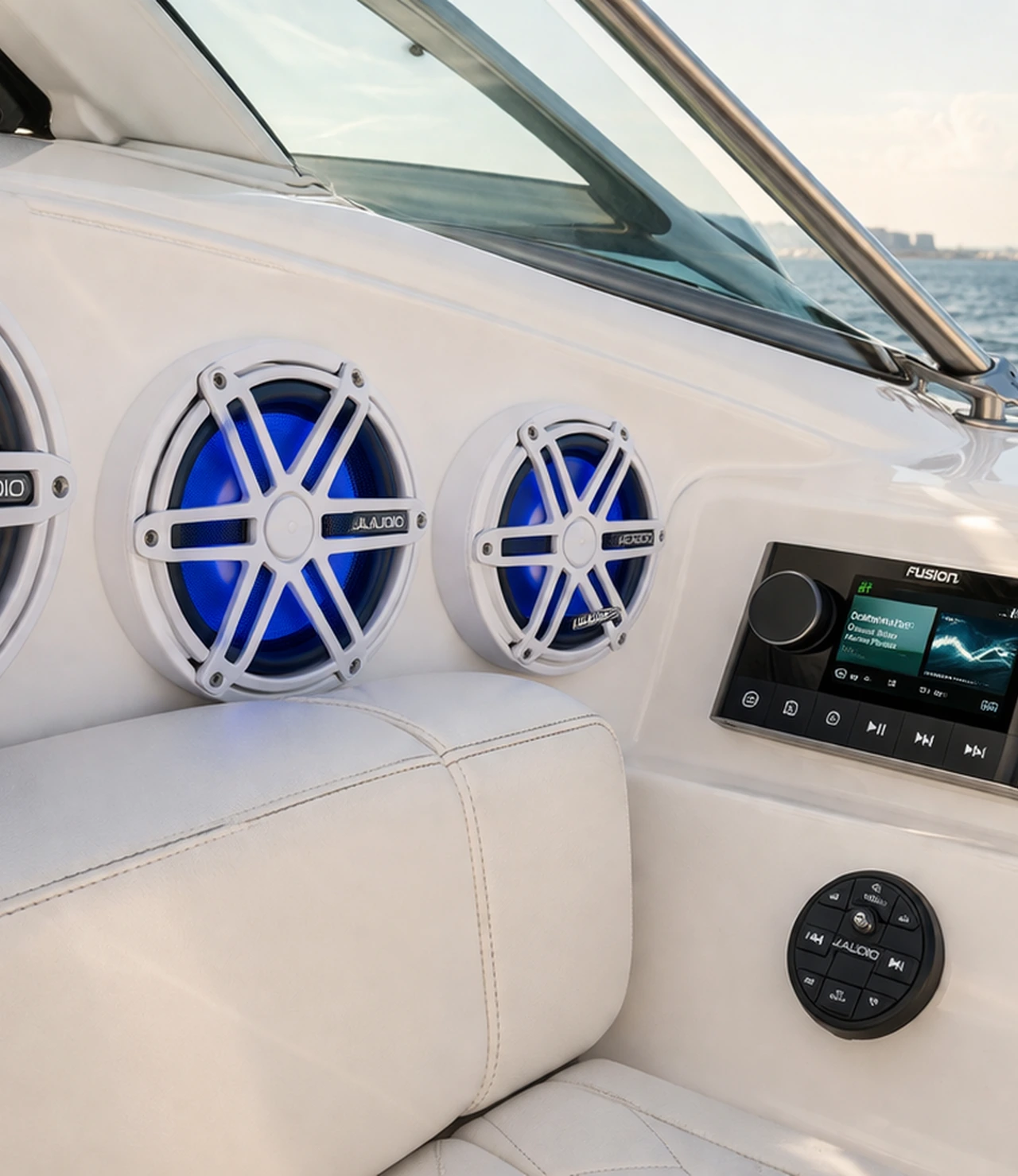
Marine Stereo, Speakers, Amplifiers, And Subwoofers
A boat audio system should feel balanced, not pieced together. We help plan around the listening areas that matter most, the amount of output needed underway, and the type of control you want at the helm or throughout the vessel. Common marine audio upgrade elements include:
- Marine source units and zone control
- Speaker replacement and location planning
- Amplifier integration with cleaner power delivery
- Subwoofer solutions that add depth without wasting space
- System tuning for better clarity and less harshness at volume
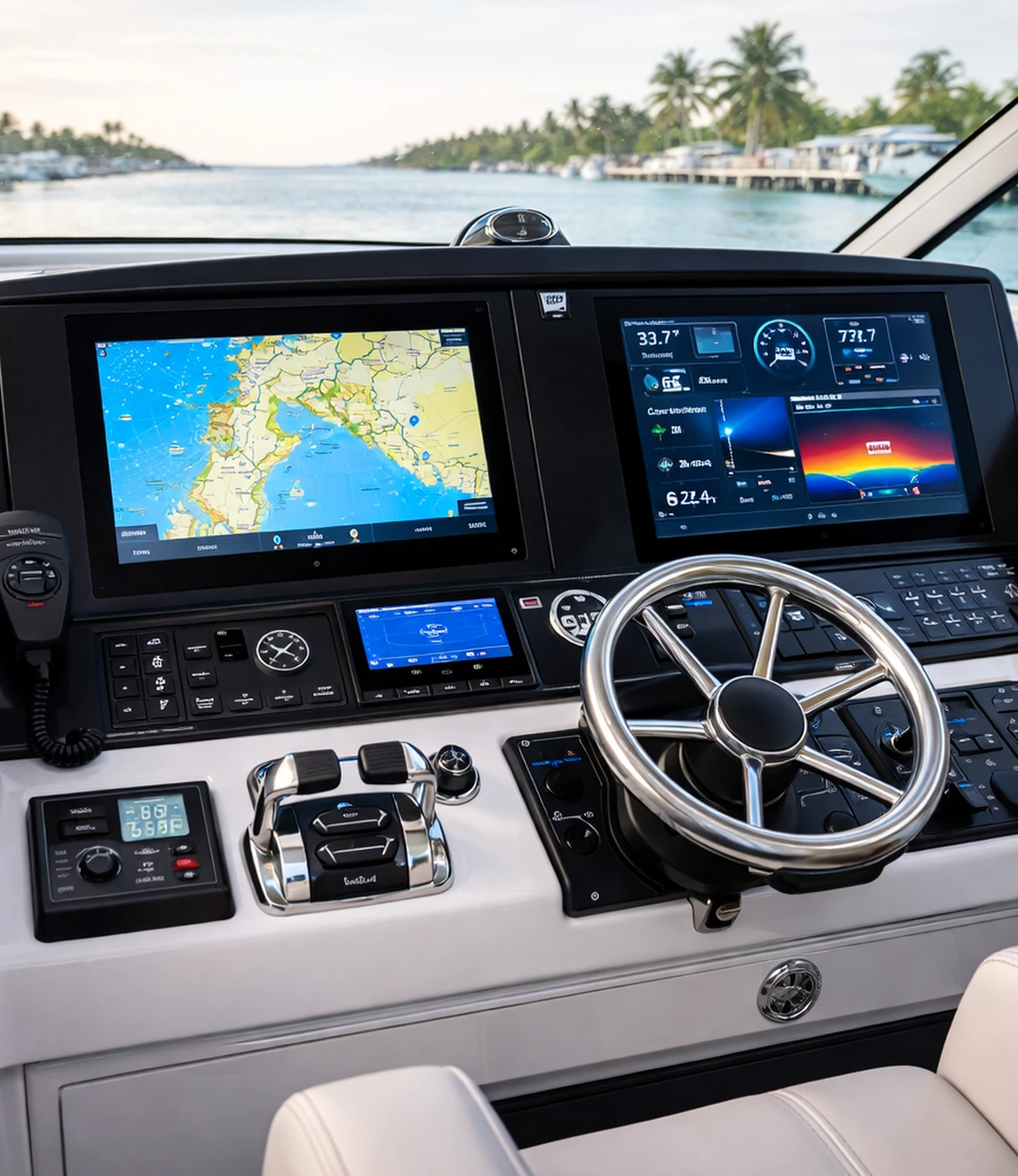
Chartplotters, Sonar, GPS, VHF, And Helm Upgrades
Marine electronics should support confidence and readability, not clutter the helm. Whether you are modernizing older equipment or planning a more coordinated refit, we can build around function, visibility, and future serviceability with solutions such as:
- Chartplotter and multifunction display upgrades
- Fishfinder and sonar display installation
- GPS, antenna, and transducer planning
- VHF radio and communication equipment integration
- Cleaner helm mounting and layout refinement
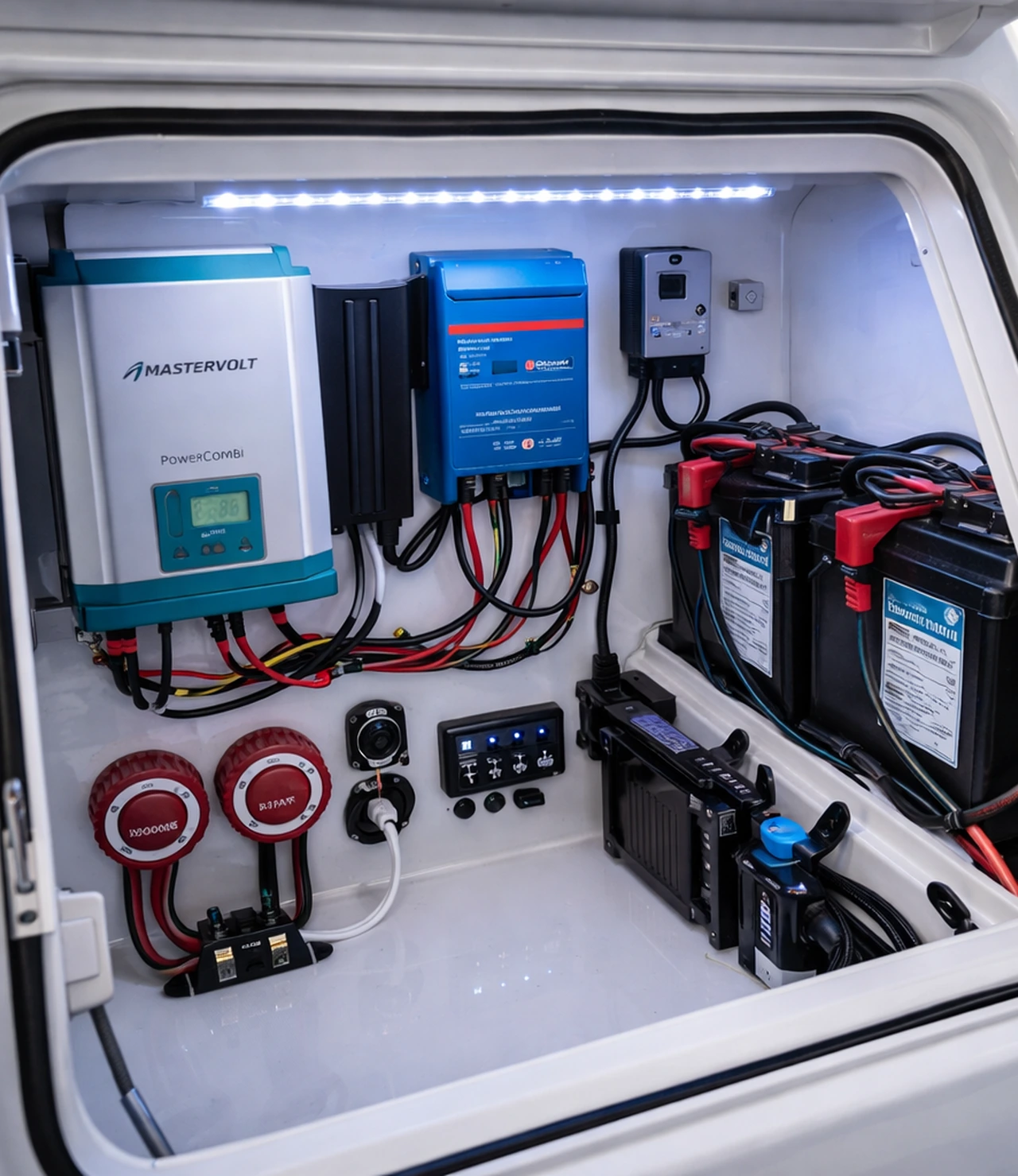
Power, Charging, Lighting, And Accessory Integration
Many marine projects become better once audio and electronics are supported by a cleaner electrical plan. Accessory control, charging, lighting, and power distribution can all affect how reliable the system feels on the water. We frequently address supporting items like:
- Power distribution cleanup and fuse planning
- Battery-conscious amplifier and accessory integration
- Helm and courtesy lighting upgrades
- USB charging and practical device connectivity
- Preparation for future zones, displays, or accessories
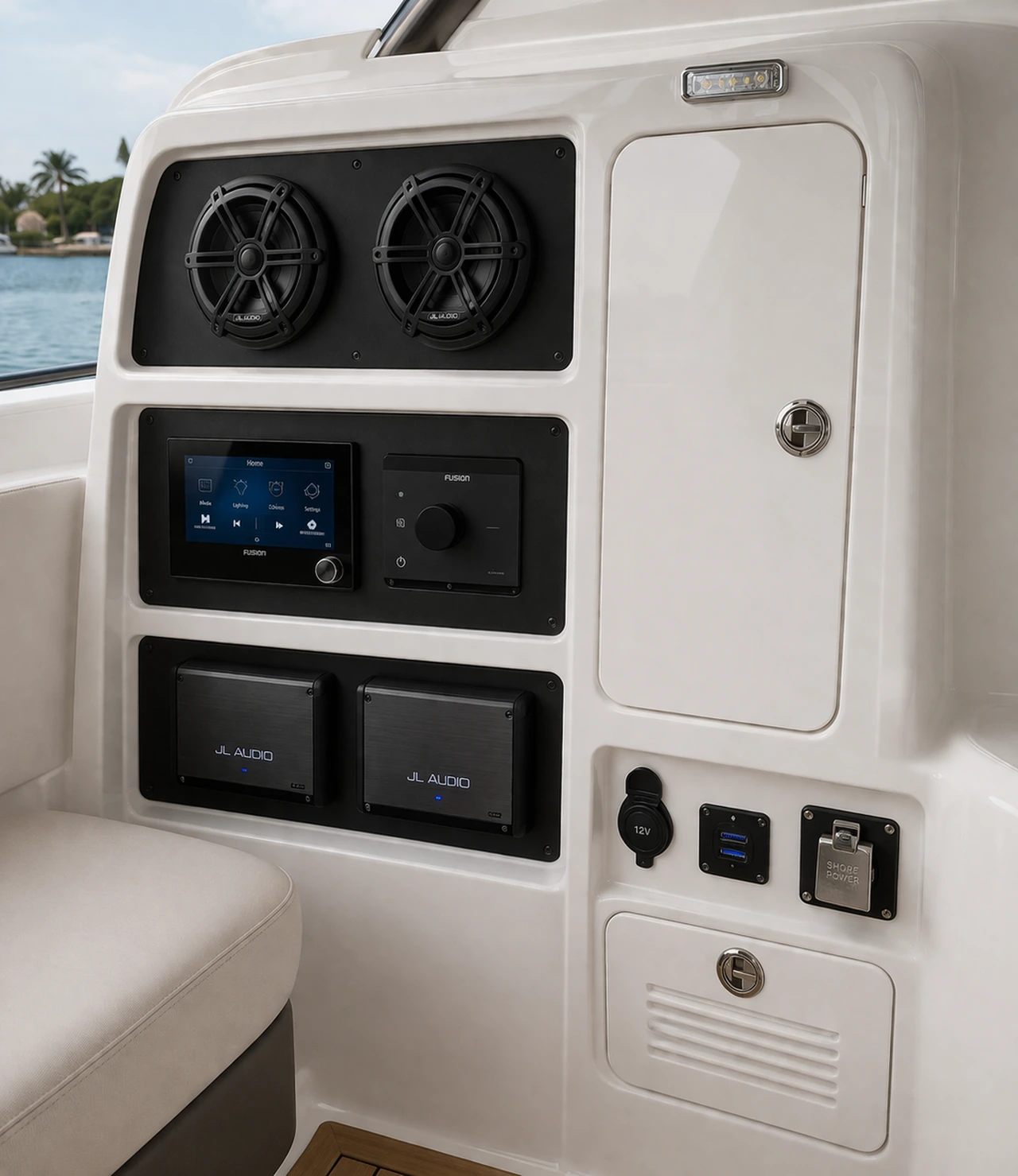
Clean Fit, Finish, And Factory-Looking Results
Boat owners usually care about more than raw performance. They want the vessel to stay clean, usable, and visually consistent. That is why planning the finish matters just as much as planning the equipment. We focus on details such as:
- Mounting choices that respect the boat’s layout
- Thoughtful cable routing and reduced visual clutter
- Access for future maintenance and troubleshooting
- Layouts that preserve storage and movement on board
- Upgrade paths that feel intentional rather than patched together
Designed For Real Marine Conditions
A good marine installation has to perform in heat, glare, moisture, vibration, and real-world use. That means choosing equipment and installation methods with long-term durability in mind, but it also means avoiding the kind of rushed wiring and awkward placement that can make even quality products frustrating to own. Our goal is to build systems that feel dependable, sound strong, and remain practical to service as your boat changes over time.
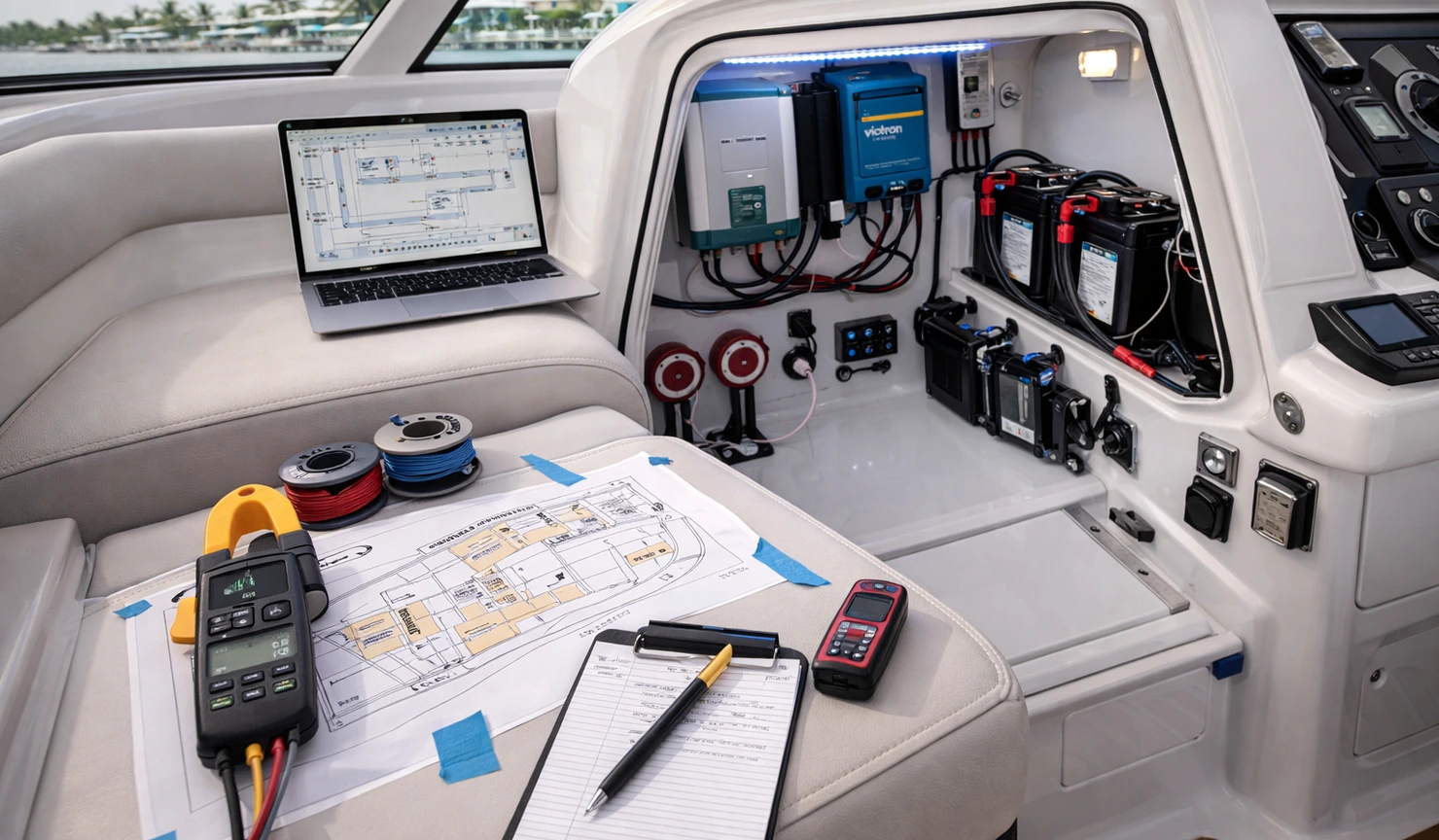
How Marine Projects Are Usually Planned

Marine Systems Built For Heat Glare Moisture Vibration
The best marine projects usually start with a practical conversation about the vessel, the way you use it, and what is not working in the current setup. From there, the installation can be scoped around the right balance of audio performance, electronics function, finish quality, and future flexibility.
What We Commonly Address
- Audio system design around cockpit, helm, bow, cabin, or transom listening areas
- Marine-grade component selection based on environment and use
- Speaker, amplifier, and subwoofer planning with realistic power goals
- Helm electronics layout for visibility, access, and cleaner operation
- Attention to wiring organization, mounting, and service access
- Integration planning for communication, navigation, and accessories
- Refit-minded recommendations when older equipment is holding the boat back
Popular Upgrade Directions
- Stereo source unit replacement
- Chartplotter and sonar display upgrades
- Helm control refinement
- Additional audio zones
- Subwoofer integration
- VHF and communication equipment installation
- Power distribution cleanup
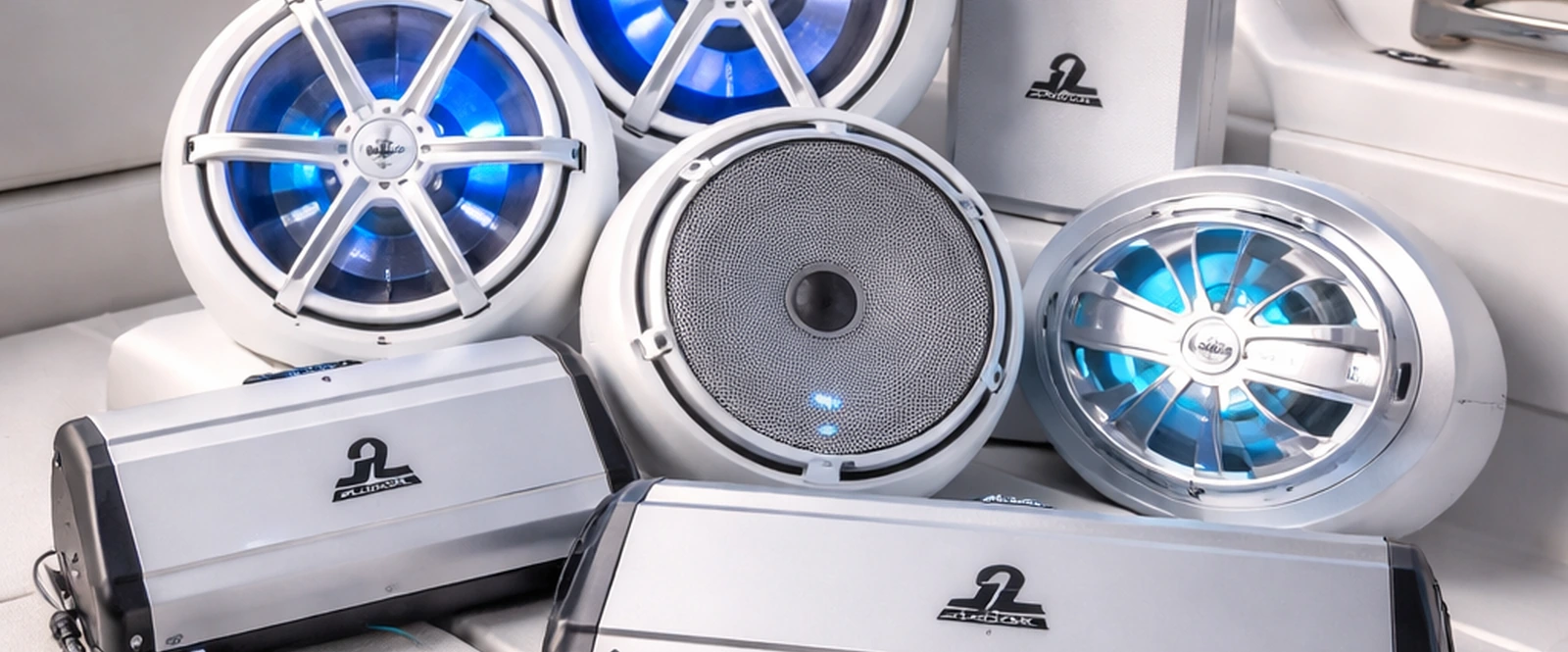

Performance And Reliability Should Improve Together
A marine upgrade should make time on the water easier to enjoy, not create new complications. That means stronger sound where you want it, helm electronics that make sense at a glance, and installation work that respects the vessel instead of fighting it. Whether the project is audio-focused, electronics-focused, or part of a broader refit, the goal stays the same: better everyday use, cleaner results, and more confidence in the system once you leave the dock.
Marine Audio And Electronics Installation FAQs
These are some of the most common questions boat owners ask when they are deciding whether to upgrade a stereo, modernize helm electronics, or plan a larger refit.

Marine Upgrade Planning
Ready To Improve The Boat, Not Just Add More Gear?
If your current boat stereo feels weak underway, your helm electronics feel outdated, or previous work has left the vessel with cluttered wiring and awkward controls, this is a good time to plan a cleaner solution. PBCAV can help map out a marine audio and electronics installation that fits the boat, the way you use it, and the level of finish you expect.