

Projector Screen Installation
Projector Screen Installation for Palm Beach, Jupiter, Palm Beach Gardens, and West Palm Beach. PBCAV helps homeowners plan the right screen size, screen type, material, placement, and control approach so the finished room feels intentional, performs correctly, and stays easy to use.

Projector screen installation should be planned like part of the room, not treated like an accessory
A projector screen project usually starts when the homeowner already knows they want a larger, cleaner viewing experience and needs help avoiding the wrong size, screen material, drop length, or screen style. The screen has to work with the projector, furniture layout, speakers, windows, and lighting conditions in the room, not just look good online. That is why a strong installation process has to begin with the way the space will be used, not with a random product recommendation.
Some rooms are clearly dedicated theater spaces and call for a fixed-frame screen with a clean, permanent presence on the wall. Other rooms need flexibility because the screen shares space with everyday living, open-concept layouts, decorative finishes, or multipurpose furniture. In those rooms, a motorized or recessed screen may be the better fit. The real value of professional projector screen installation is knowing how to sort through those options in a practical way before anything is ordered, wired, framed, or mounted.
Good screen planning also protects picture quality. Screen size changes the viewing experience. Screen material changes how the image holds up against ambient light. Aspect ratio changes how movies, sports, and streaming content are presented. Even the physical placement of the screen affects comfort, neck position, image uniformity, and how well the projector can be aligned. When those decisions are made in isolation, homeowners often end up solving one problem while creating another.
PBCAV approaches projector screen installation as part of a larger performance system. That means considering the intended projector, seating distance, speaker layout, wiring path, framing conditions, control needs, and the final visual appearance of the room. The goal is not to install the biggest screen possible. The goal is to install the right screen for the room so the finished experience feels balanced, deliberate, and satisfying every time it is used.
For homeowners who want a space that feels clean and complete rather than pieced together, that difference matters. A projector screen is one of the most visible elements in the room. It affects architecture, image performance, furniture placement, and usability all at once. When it is selected and installed correctly, it disappears into the experience. When it is handled poorly, it becomes the thing everyone notices for the wrong reasons.
Start with the right screen category for the room
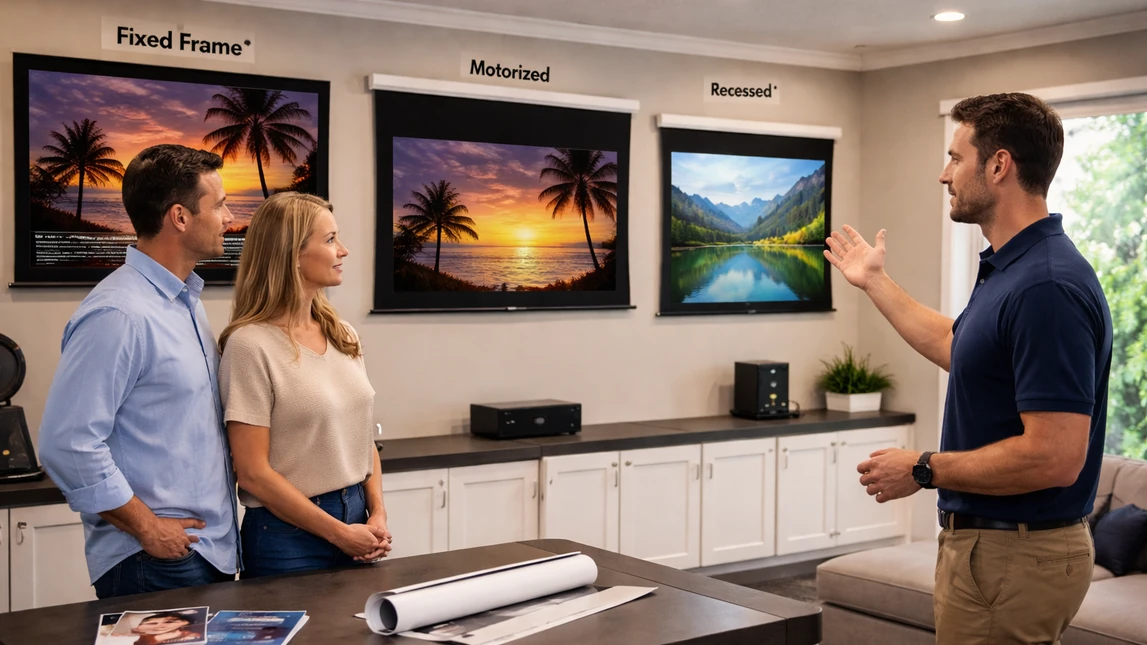
The first decision is usually not brand. It is screen style. Fixed-frame screens make sense when the room is dedicated to viewing and the screen can remain permanently visible. Motorized screens work well when the room has mixed uses and the display needs to retract when not in use. Recessed in-ceiling screens are often chosen when the goal is a cleaner architectural look. Manual pull-down screens may fit simpler spaces, while ultra-short-throw-compatible models require more careful matching to the projector and mounting conditions. The right category depends on how the room functions day to day, how finished the installation should look, and how much precision is needed from the overall system.
Screen size, shape, and drop length all need to work together
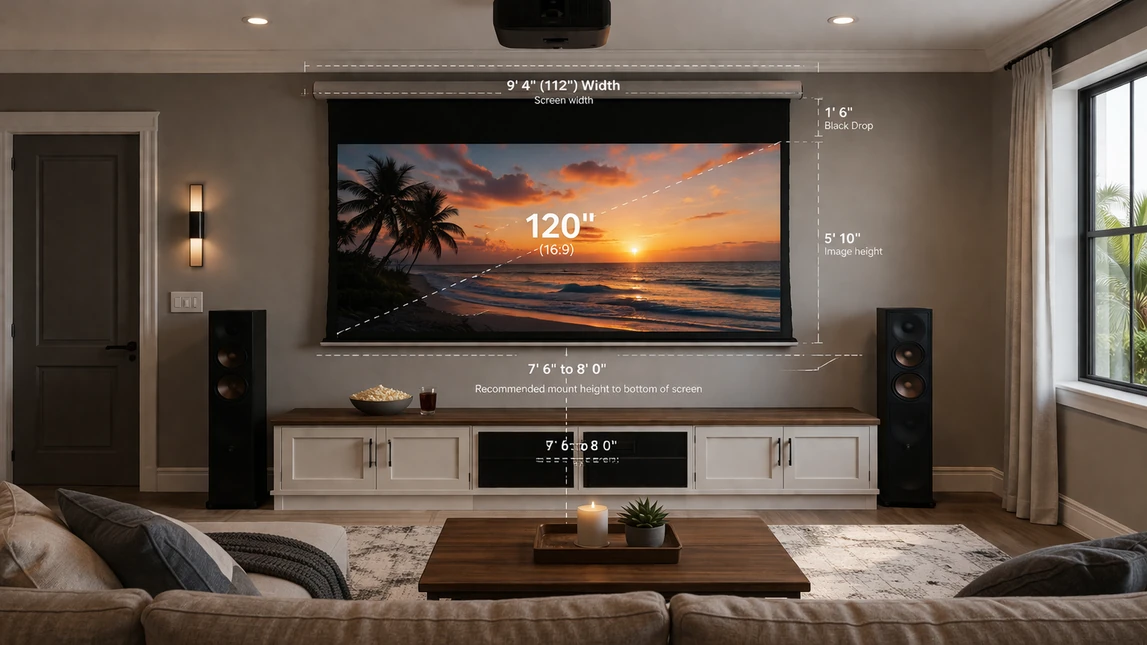
A projector screen should not be sized in a vacuum. Viewing distance, furniture layout, ceiling height, the image format you care about most, and the projector’s throw characteristics all influence what feels right. A screen can be too small and underwhelming, but it can also be too large for the seating position or too tall for comfortable long-form viewing. Motorized screens add another layer because drop length and housing position affect whether the image lands at the correct height once the screen is deployed. Good installation planning accounts for all of that before any brackets are mounted.
Material selection matters just as much as the mount
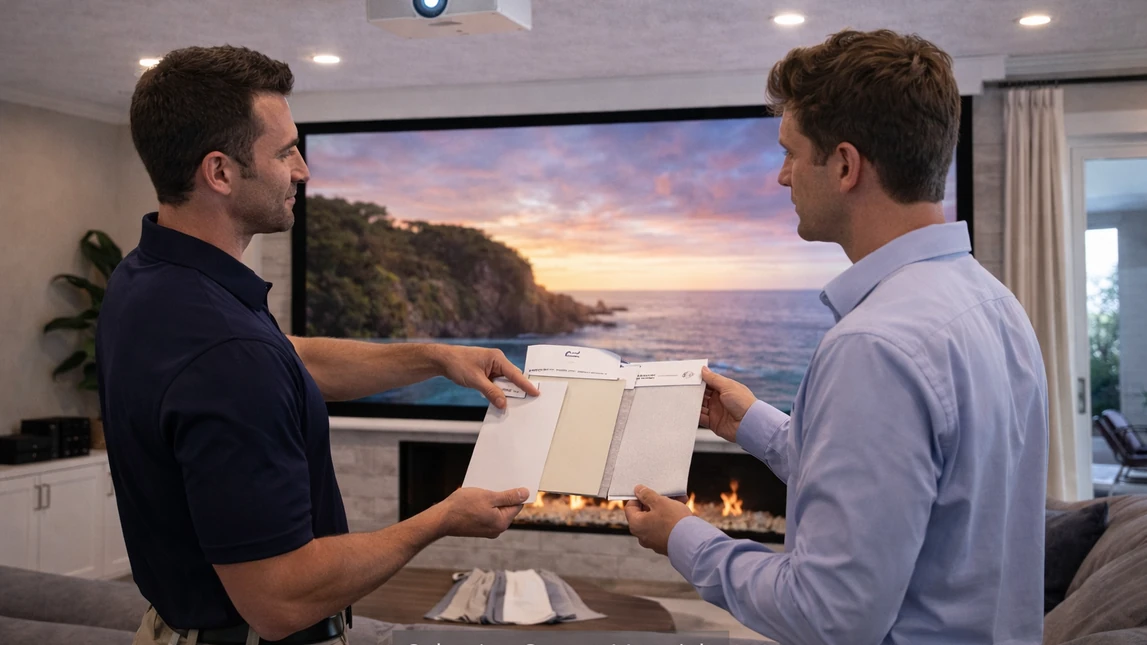
White screen materials are often a smart fit for darker dedicated rooms, while ambient-light-rejecting materials can make more sense in brighter spaces where complete light control is not realistic. Some homeowners also benefit from acoustically transparent materials when the best speaker placement is behind the screen rather than around it. Each of those choices changes the finished experience. A proper installation process should account for room brightness, image goals, speaker placement, and projector compatibility rather than assuming every screen surface behaves the same way.
Placement should support the projector, speakers, and the finished room
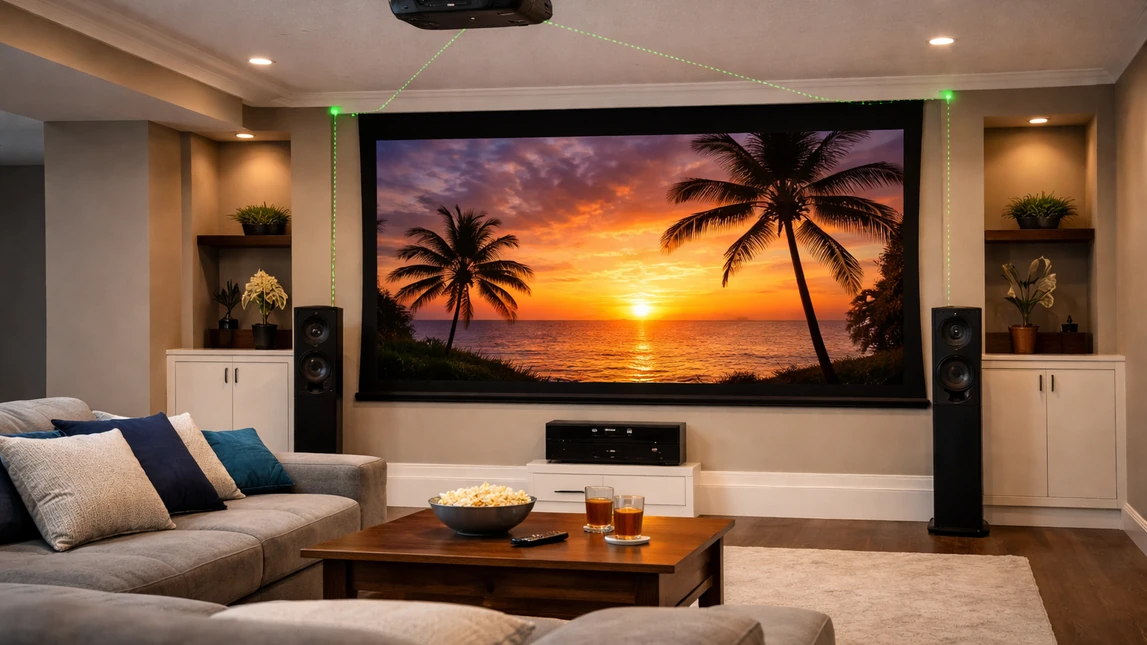
Projector screen installation is tied directly to sightlines, projector location, cable paths, framing conditions, trim details, and sometimes electrical planning for motorized units. In some rooms, the screen location is easy. In others, it has to be coordinated around windows, fireplaces, soffits, center-channel speaker placement, cabinetry, or future construction details. Good installation is about more than getting the screen on the wall. It is about making sure the screen height, surrounding space, and overall alignment support both performance and appearance once the room is complete.
Projector screen options should match the way the room will actually be used
The best installation outcome usually comes from narrowing the screen style to the room first, then refining size, material, controls, and placement around the rest of the system.
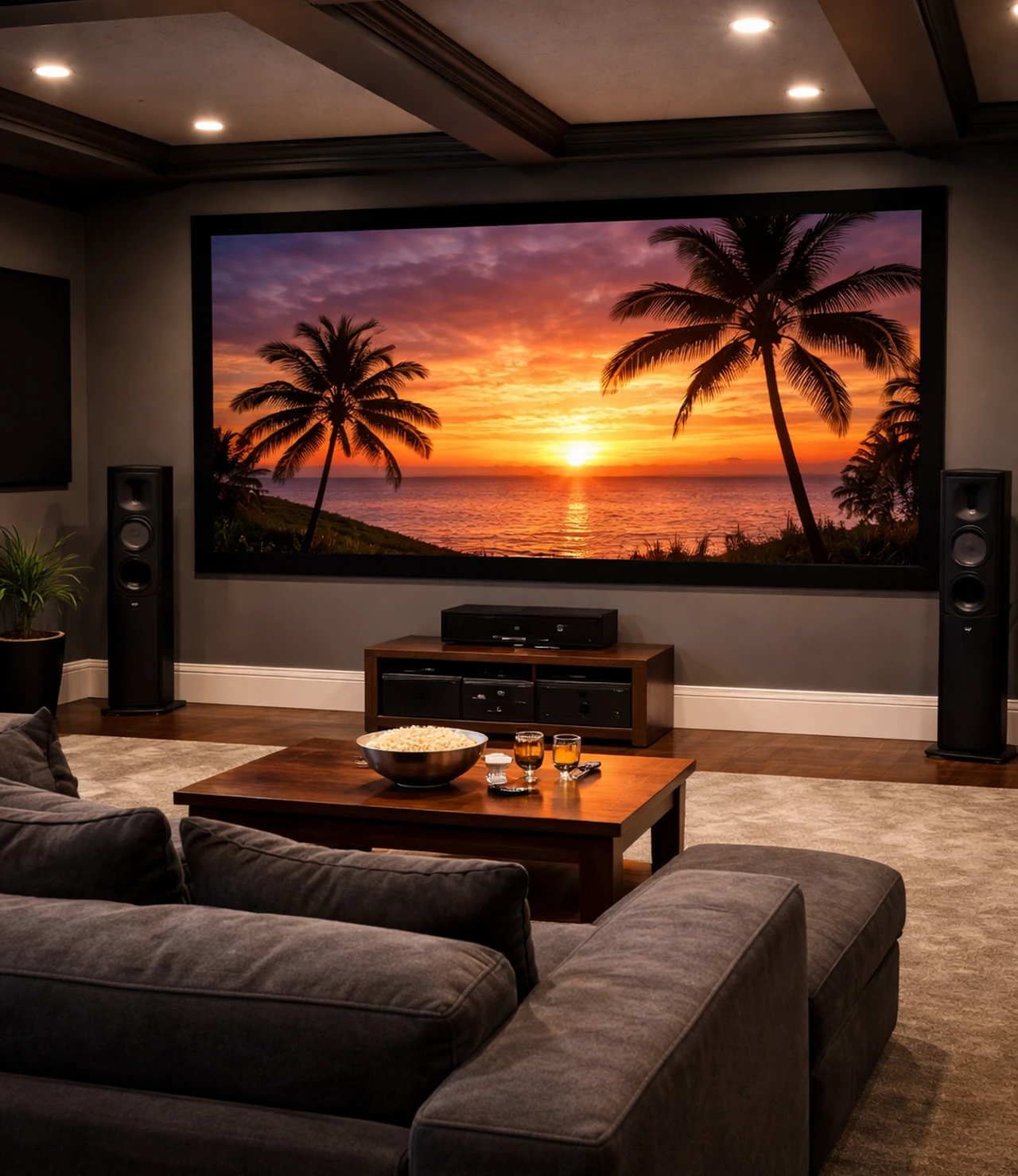
Fixed-frame projector screens for dedicated viewing spaces
Fixed-frame projector screen installation is often the strongest option when the room is centered around viewing performance and the screen can remain visible all the time. These screens hold their shape well, create a permanent focal point, and are especially appealing for serious movie watching where flatness, consistency, and aesthetics matter.
- Ideal for dedicated theaters, media rooms, and formal entertainment spaces.
- Often the cleanest choice for larger image sizes and high-performance projector pairings.
- Works well when speaker placement, lighting, and furniture can be designed around the screen wall.
- Commonly chosen for acoustically transparent screen materials when speakers are placed behind the image.
- Best for homeowners who want the screen to feel like a permanent part of the room rather than a temporary add-on.
Motorized projector screens for flexible rooms
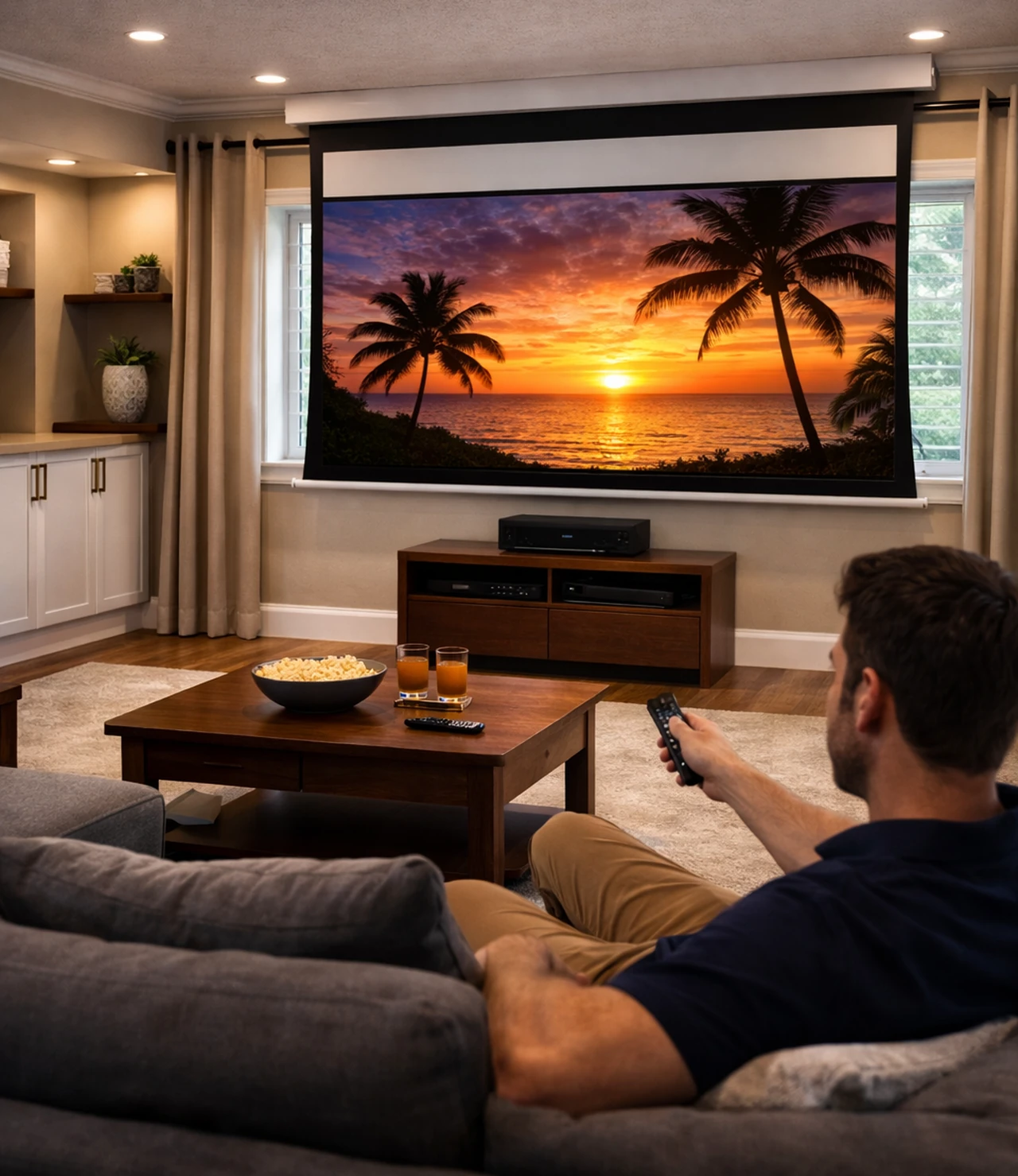
Motorized projector screen installation makes sense when the room serves more than one purpose and the display should disappear when not in use. These systems can preserve a cleaner look in living spaces, multipurpose rooms, and open-concept layouts while still delivering a large image when it is time to watch.
- Good fit when a television, artwork, windows, or architectural features need to share the same wall.
- Useful for rooms where a permanent fixed-frame screen would feel visually heavy.
- Requires careful planning for housing location, drop length, power, and control strategy.
- Can be integrated into wider automation and remote-control systems for simpler daily use.
- Often chosen by homeowners who want performance without making the room look like a dedicated theater full-time.
Recessed projector screens for a cleaner architectural finish
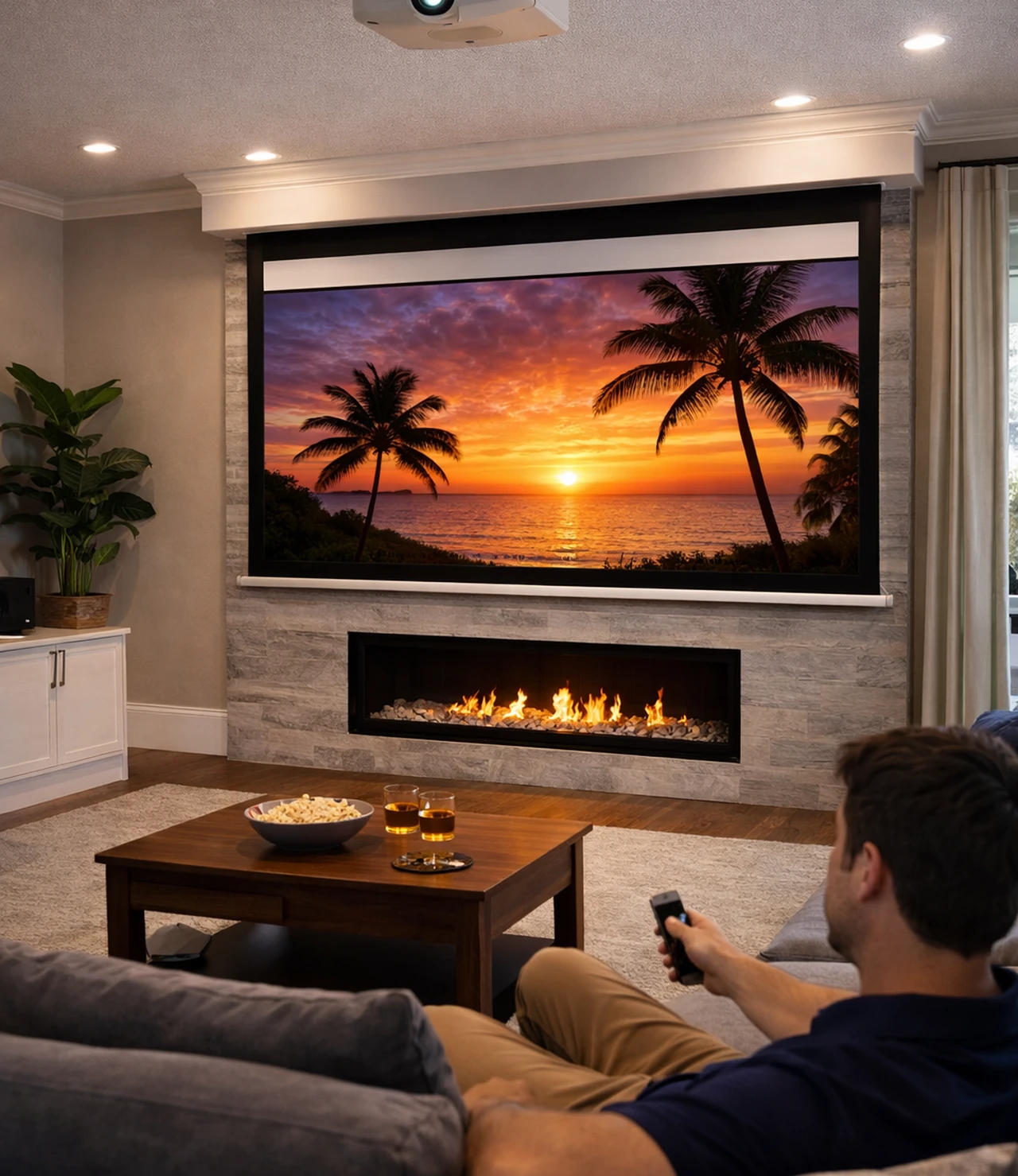
In-ceiling and recessed projector screen installation is usually chosen by homeowners who want the screen hidden as much as possible when the system is off. These installations can look excellent, but they also require more coordination because framing, access, trim work, screen case dimensions, and serviceability all matter.
- Best planned early when construction, renovation, or ceiling modification is already underway.
- Needs careful measurement so the housing, slot, and screen drop all align correctly.
- Can create a refined finished look when the room design is a high priority.
- Often benefits from prewire and low-voltage coordination before finishes are complete.
- Should be approached with the same seriousness as any other built-in feature in the room.
Acoustically transparent screens when speaker placement matters
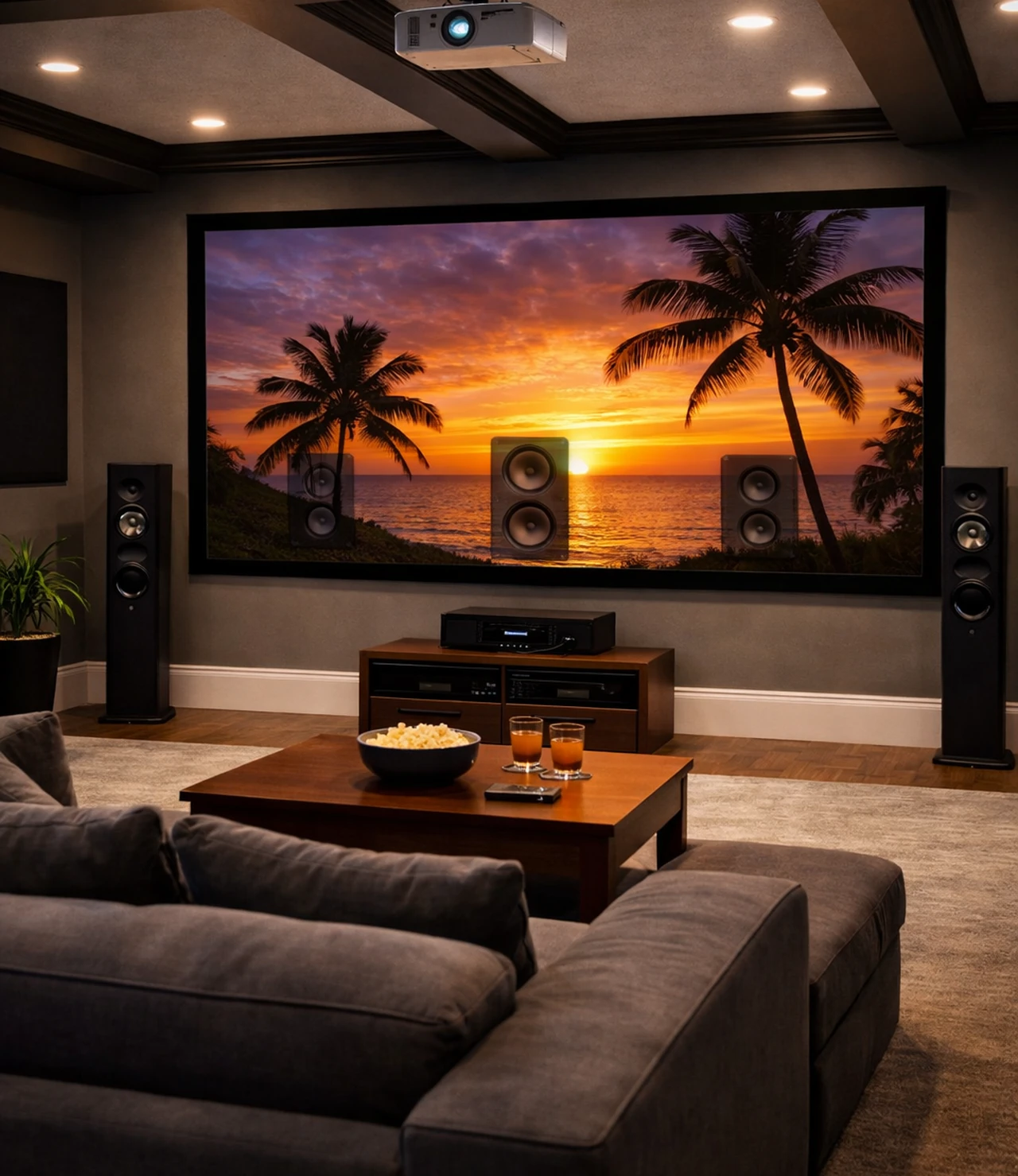
Some rooms benefit from placing the front speakers behind the screen rather than around it, especially when the goal is a more cinema-style front stage or a cleaner screen wall. In those situations, acoustically transparent projector screen installation can make excellent sense, but it has to be planned properly so the material, projector, and speaker layout all work together.
- Useful when left, center, and right speakers should align behind the image.
- Can improve symmetry on the screen wall and help avoid awkward speaker compromises.
- Needs thoughtful material selection to balance sound transmission and image quality.
- Often paired with fixed-frame installations in more performance-focused rooms.
- Works best when the room layout is designed around the screen and speaker system as one unified plan.
Why professional projector screen installation matters
A projector screen can look simple on paper, but real-world installation rarely is. The finished result depends on accurate measurements, safe mounting, clean cable planning, compatible controls, proper drop height, and a screen choice that suits both the projector and the room. That is where professional planning becomes valuable. It reduces avoidable mistakes, protects the finished appearance of the room, and helps the screen perform the way it was meant to once the system is actually in use.
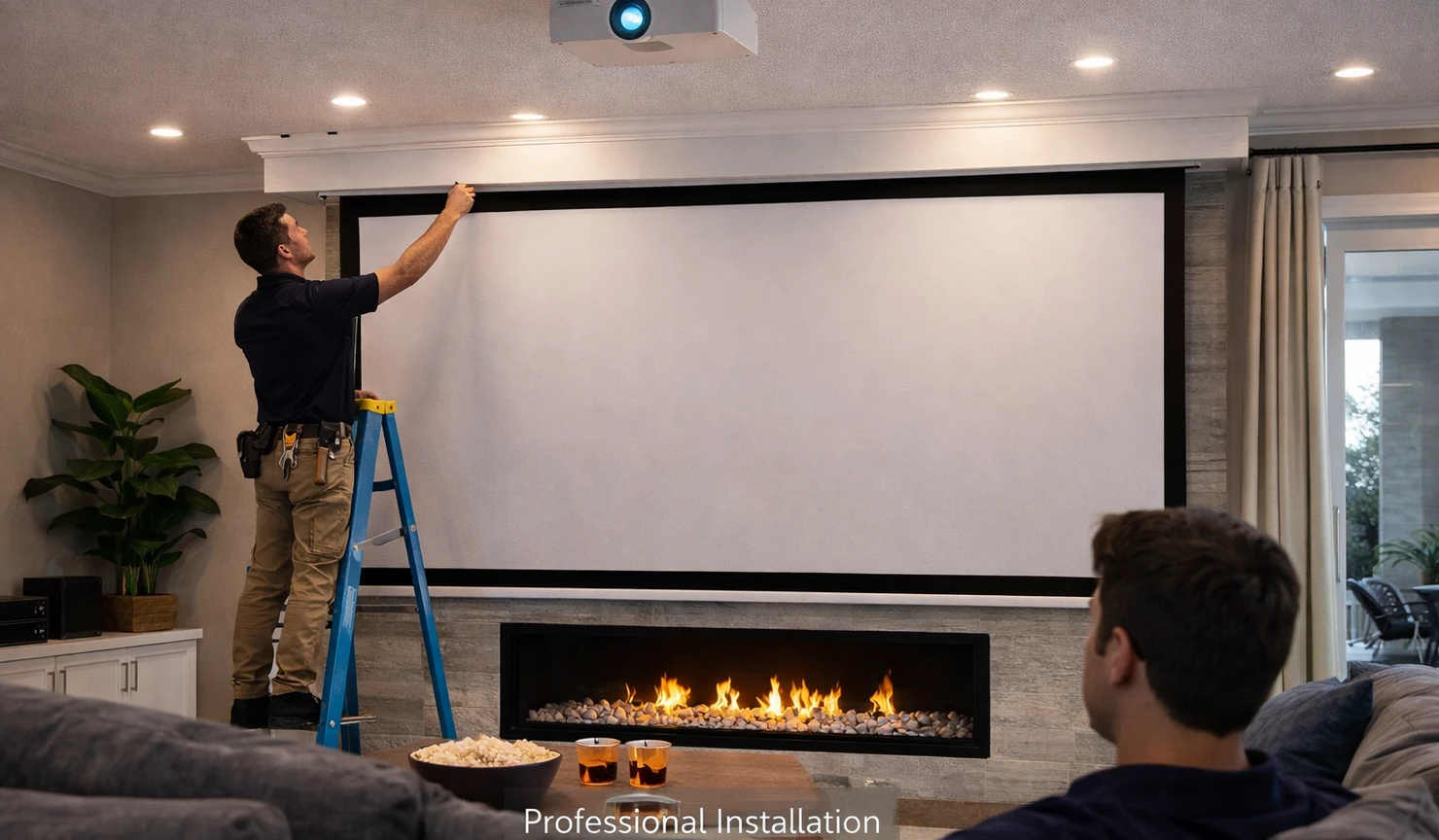
What goes into a proper projector screen installation

Proper Projector Screen Installation Coordination
The strongest screen installations are usually the ones that feel obvious only after they are finished. The screen height feels comfortable. The image size feels right from the seats. The housing is placed where it should be. The controls behave the way the homeowner expects. The room still looks intentional when the system is off. Reaching that outcome usually requires more coordination than people expect, especially when the screen has to coexist with speakers, trim details, existing finishes, or future construction plans.
Common projector screen types we install
- Fixed-frame projector screens
- Motorized projector screens
- In-ceiling recessed projector screens
- Wall-mounted electric screens
- Manual pull-down projector screens
- Acoustically transparent screen systems
- Ambient-light-rejecting screen solutions
What we account for during installation
- Screen size, aspect ratio, and viewing distance
- Wall, ceiling, soffit, or recessed mounting conditions
- Projector compatibility and image alignment
- Screen material selection for room brightness and use
- Speaker placement and front-wall coordination
- Power, low-voltage, and control planning for motorized screens
- Finished appearance when the system is on and off
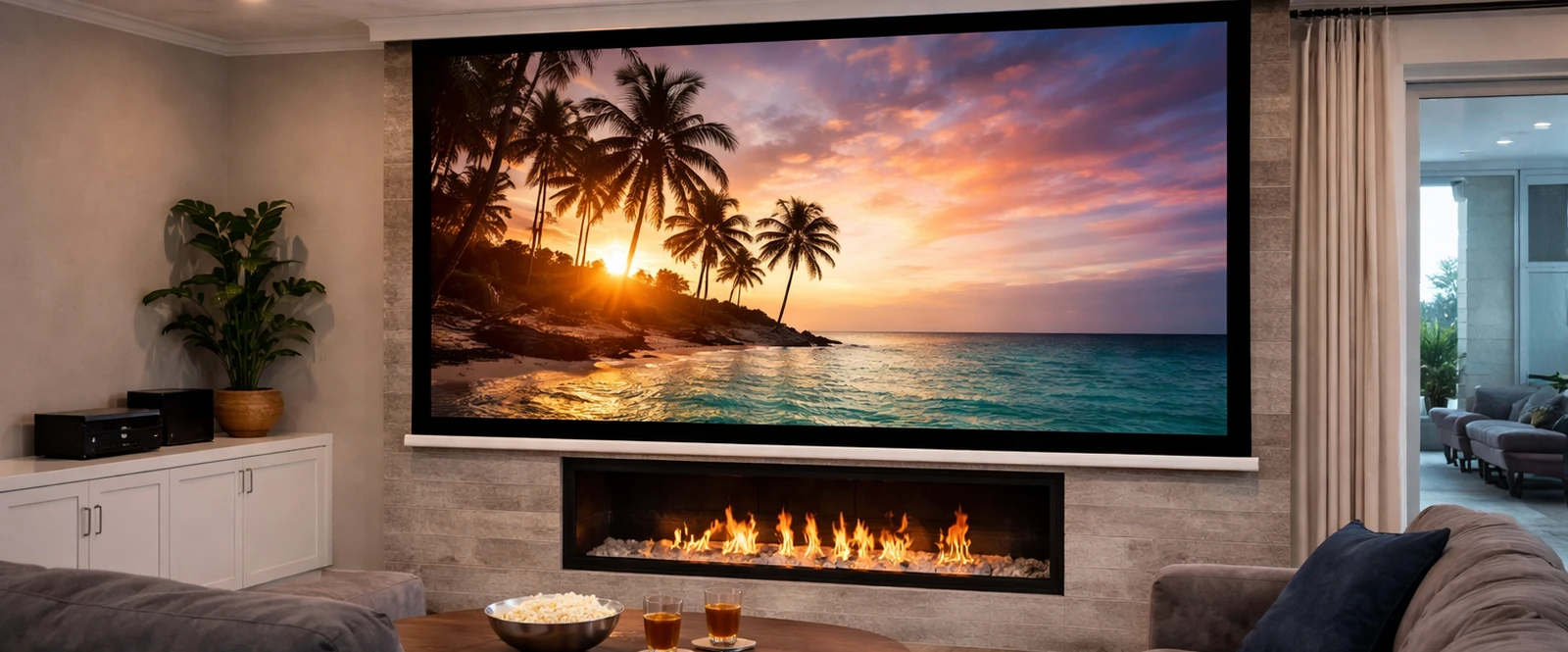

A projector screen should feel intentional once the room is finished
The best projector screen installations do not draw attention to compromises. They support the image, fit the room, coordinate with the rest of the system, and make sense every time the homeowner uses the space.
Details that separate a strong installation from a frustrating one
The right screen is only part of the answer. Placement, material, trim conditions, controls, and system coordination are what make the final result feel complete.

Projector Screen Planning
Ready to plan a projector screen installation that actually fits the room?
PBCAV helps homeowners sort through screen style, size, material, placement, and control decisions before installation begins, so the finished system looks right, performs correctly, and feels easy to use.